Villa Presti
- Home
- /
- Arte e cultura
- /
- Hidden treasures
- /
- Villa Presti
The origins of Villa Presti and the former Villa Serlini along the Via Padana Superiore
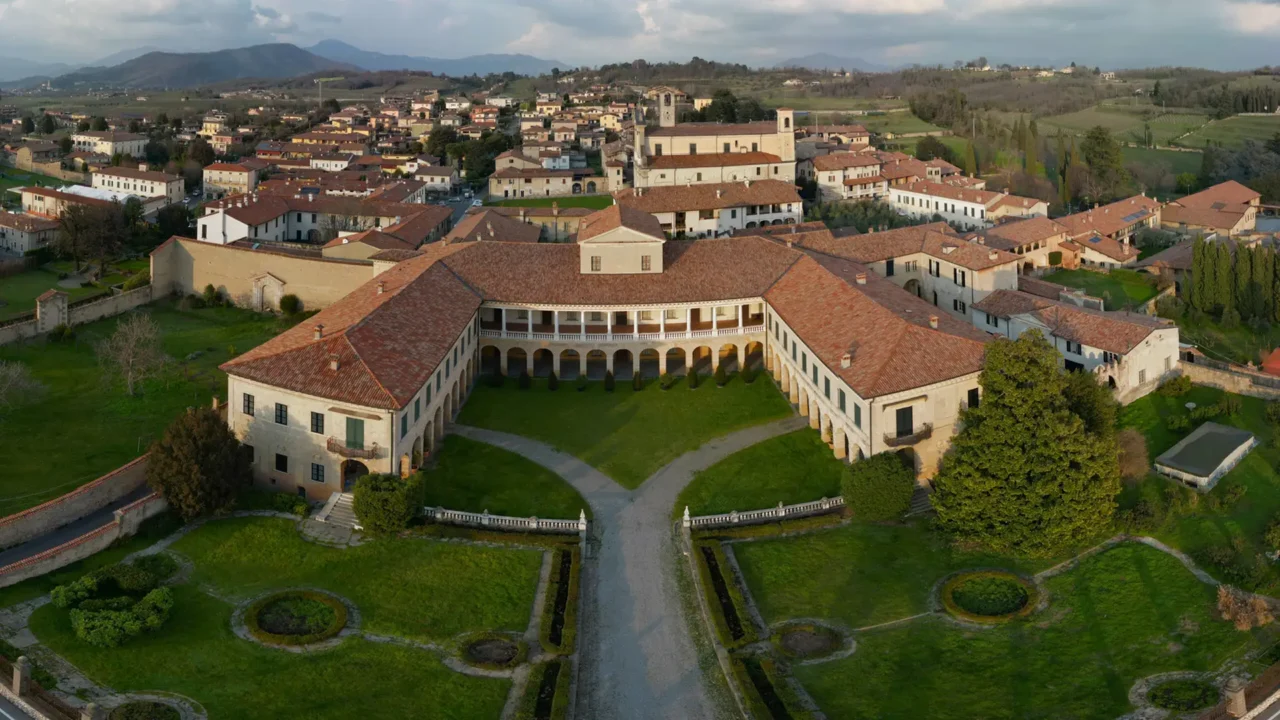
Located in the centre of the village, along what is now Via Padana Superiore, Villa Presti was built on the site of an older building: Villa Serlini, once owned by Commendatore Federico Serlini (1875–1942), a prominent figure who devoted himself to the construction of major public works, such as the ‘Ricovero Vecchi Serlini’, established as a charitable trust by royal decree on 13 November 1942, the Nursery and Primary Schools, the construction of which he promoted once he became mayor.
Suggestive early 20th-century architecture set amidst a romantic garden
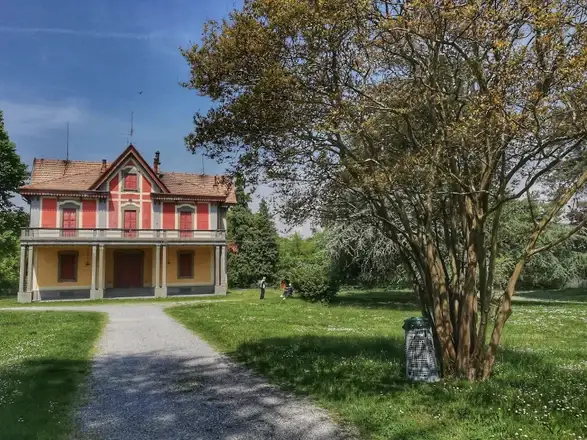
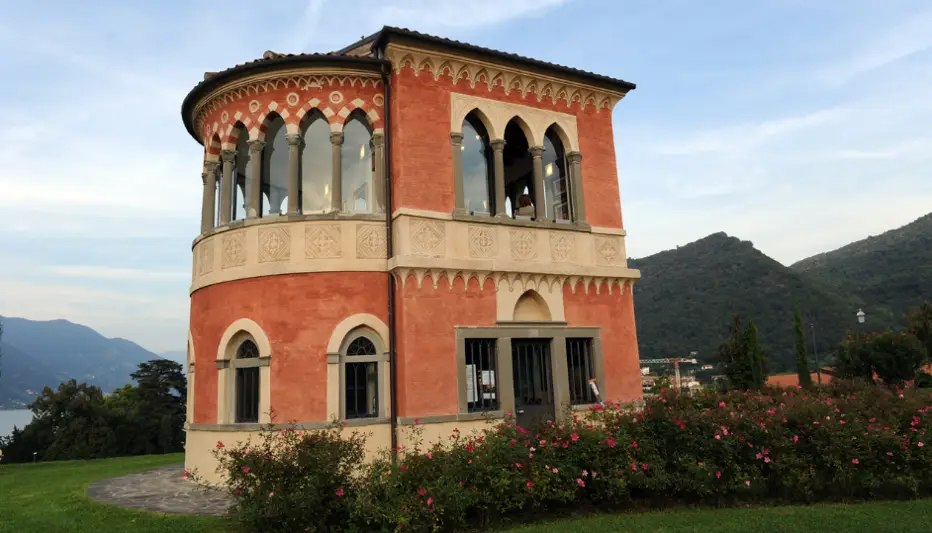
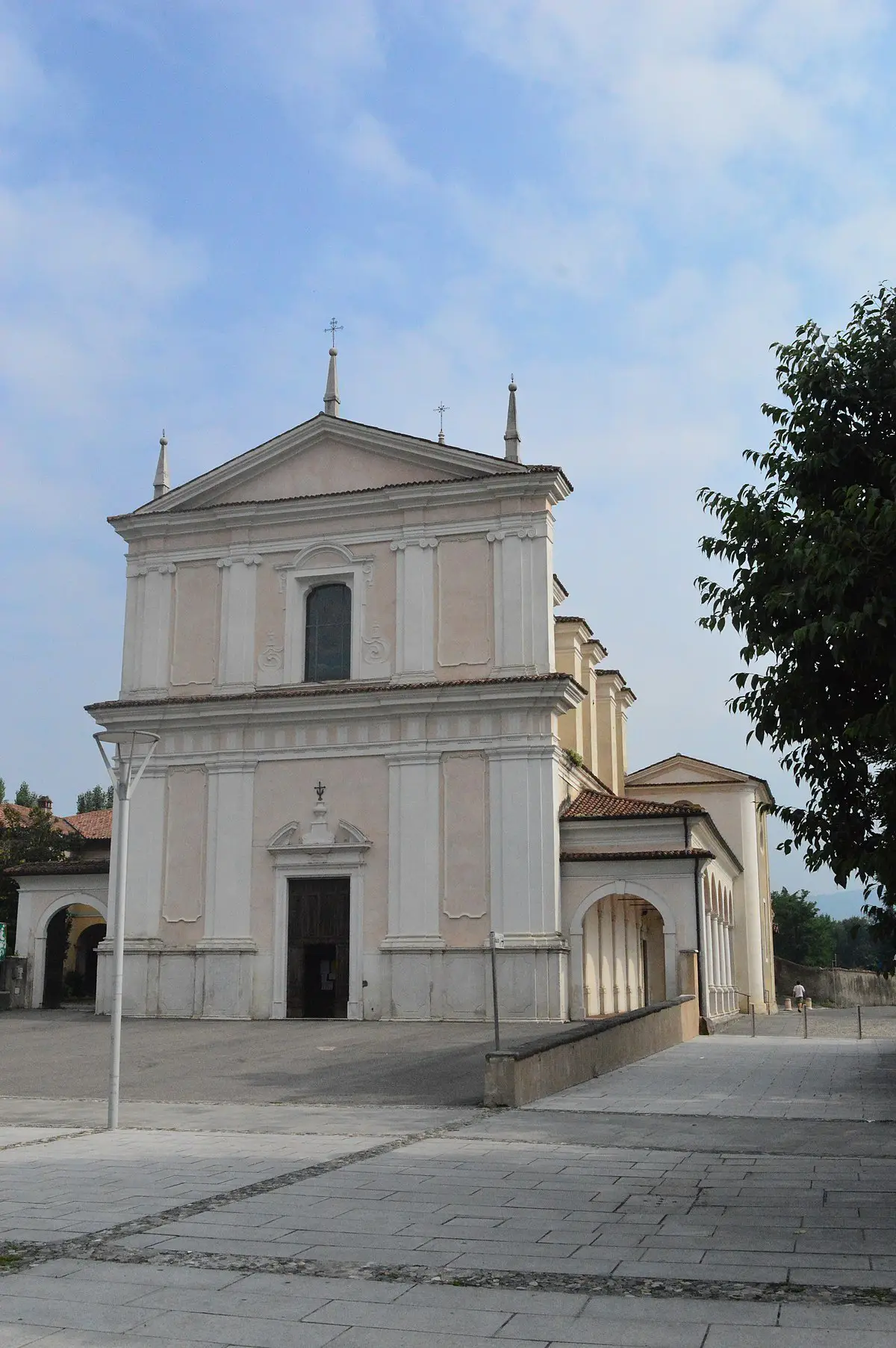
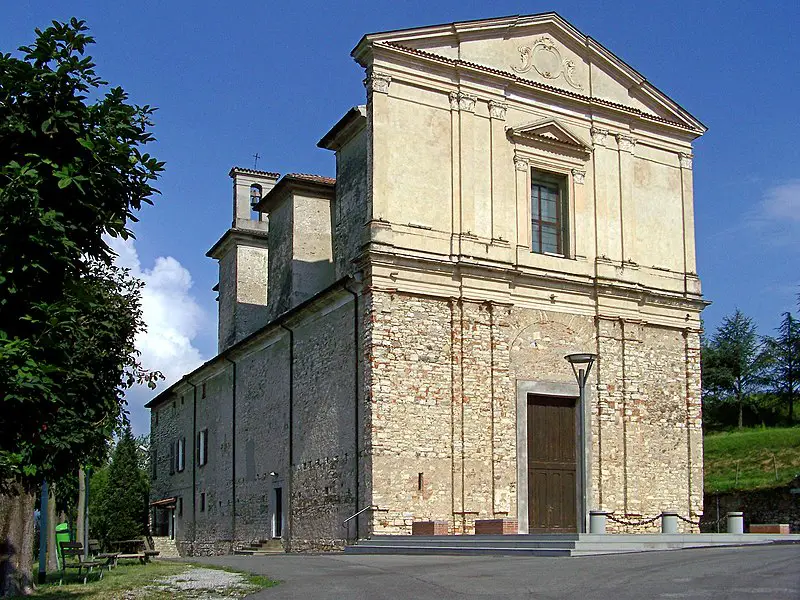
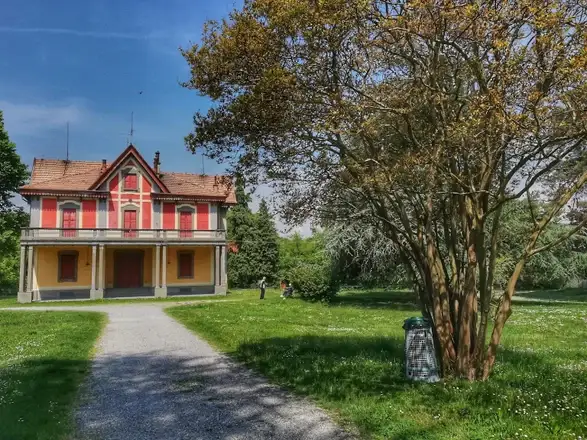
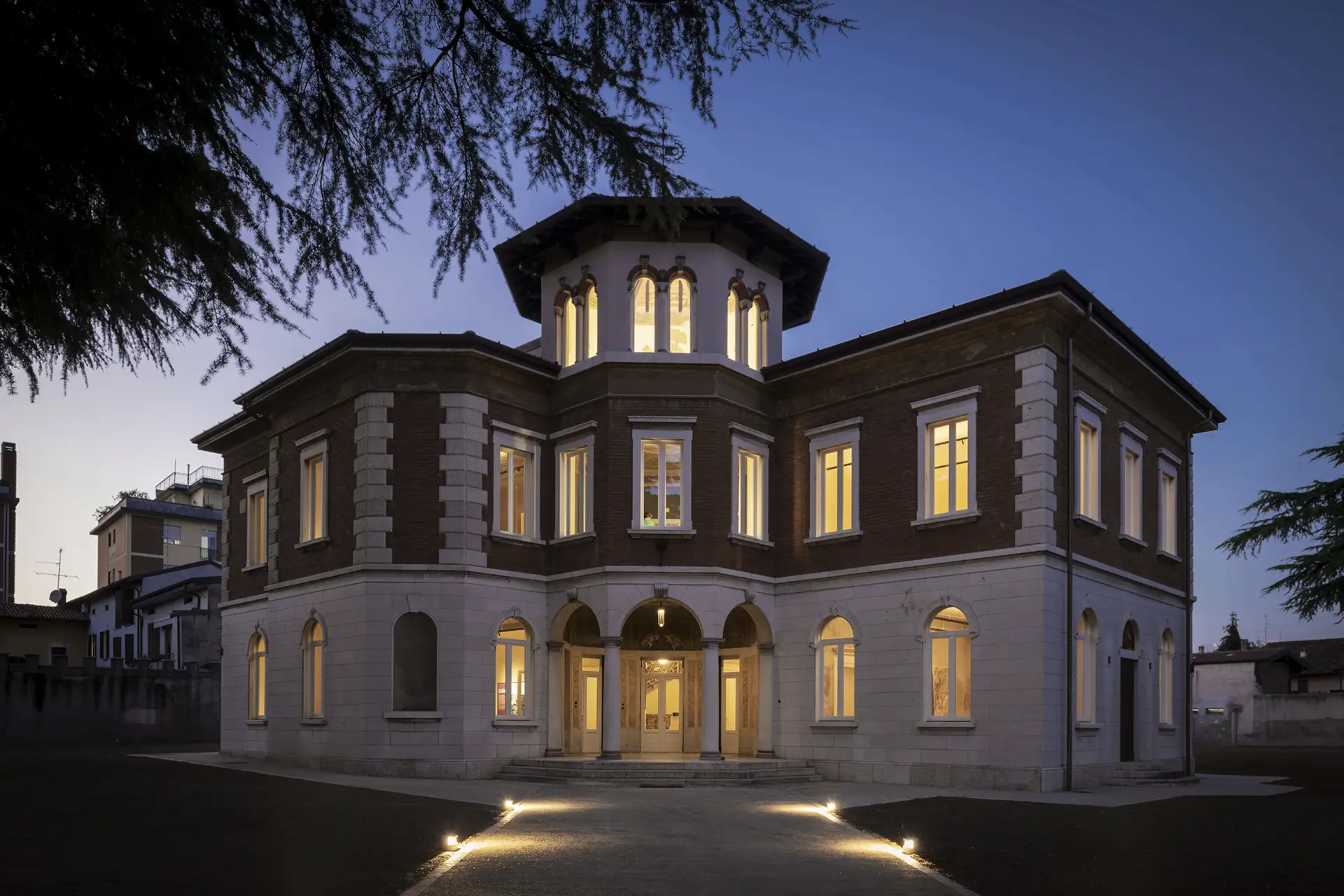
Surrounded by a lush, romantic garden, the villa still retains its original appearance and can rightly be considered one of the most evocative examples of early 20th-century architecture in the Franciacorta region: the picturesque complex consists of three architectural units joined together, featuring an octagonal structure with a turret at its centre, flanked by two rectangular blocks.
Façade, style and influences ranging from Neo-Renaissance to Italian Art Nouveau
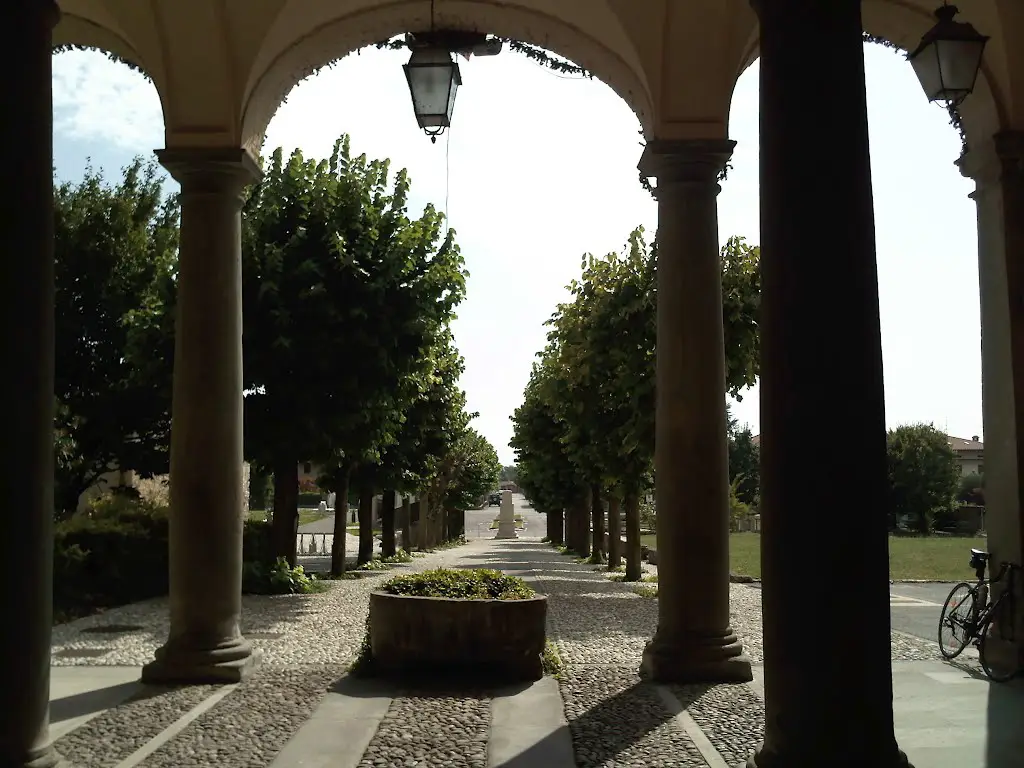
The façade is characterised by a curvilinear profile, with the ground-floor entrance framed by an elegant portico with three arches, supported by columns in the classical style. The exterior surfaces, which play on the contrast between the white of the stone and the red of the bricks and render, are made to appear more airy by the numerous windows in the Neo-Renaissance style: although the villa dates from the early 1920s, it still maintains a strong link with the stylistic features of Italian Art Nouveau, particularly the revival of historical styles.
Project award and conclusion of works
The architect’s name is unknown; he may perhaps be identified as Giovanni Tagliaferri, Antonio’s nephew, who had previously been commissioned to design the Nursery and the Shelter: a letter dated 24 March 1919 (AFS, file Construction of the new Vecchi shelter, 1914–1919), sent by Tagliaferri to Serlini, refers, in fact, to work carried out ‘for the construction of his villa’. The building was completed in 1923.
From a historic villa to the Ghidoni Museum: Domenico Ghidoni between Realism and social commitment
Owing to its historical significance, the villa was recently acquired by the Municipality of Ospitaletto to serve as the venue for a new, ambitious project: the Ghidoni Museum, dedicated to the great sculptor Domenico Ghidoni, who was born in Ospitaletto on 17 November 1857 and died on 2 September 1920. Having received his initial training from the Brescian marble sculptor Pietro Faitini, he honed his skills in Milan and Turin, frequenting stimulating circles such as the studio of Odoardo Tabacchi, creator of the monument to Arnaldo in the square of the same name in Brescia. He embraced the Verismo movement and achieved fame thanks to his work ‘Emigranti’, the final version of which dates from 1920: the work, which effectively illustrates what had become a widespread phenomenon linked to poverty in the newly unified Italy, had already enjoyed great success in its first version at the 1891 Brera Exhibition, and was awarded one of the three prizes by the Antonio Tantardini Artistic Institution. Other famous works include the monument to Tito Speri, in the small square of the same name in Brescia; the two Lions now situated at the entrance to the Tosio Martinengo Art Gallery in Brescia; and the group “Le nostre schiave”, a 1894 work on the theme of prostitution that offered a strong social critique, the plaster cast of which, having been rejected, was never cast in bronze.
Museum opening and exhibitions
The museum was opened on September 16th, 2023, with an exhibition of seven sculptures by Ghidoni, owned by the Municipality of Ospitaletto. To date, 25 works are on display: 13 from private collections and five from the Fondazione Brescia Musei, with which the Municipality has established a partnership.
The spaces set aside for temporary events host various exhibitions and events aimed at children.
Links and useful information


Opening hours: Saturdays and Sundays 10am – 12pm and 3pm – 6pm. Free guided tour every Saturday and Sunday at 4pm.
Free admission
Publicly owned property