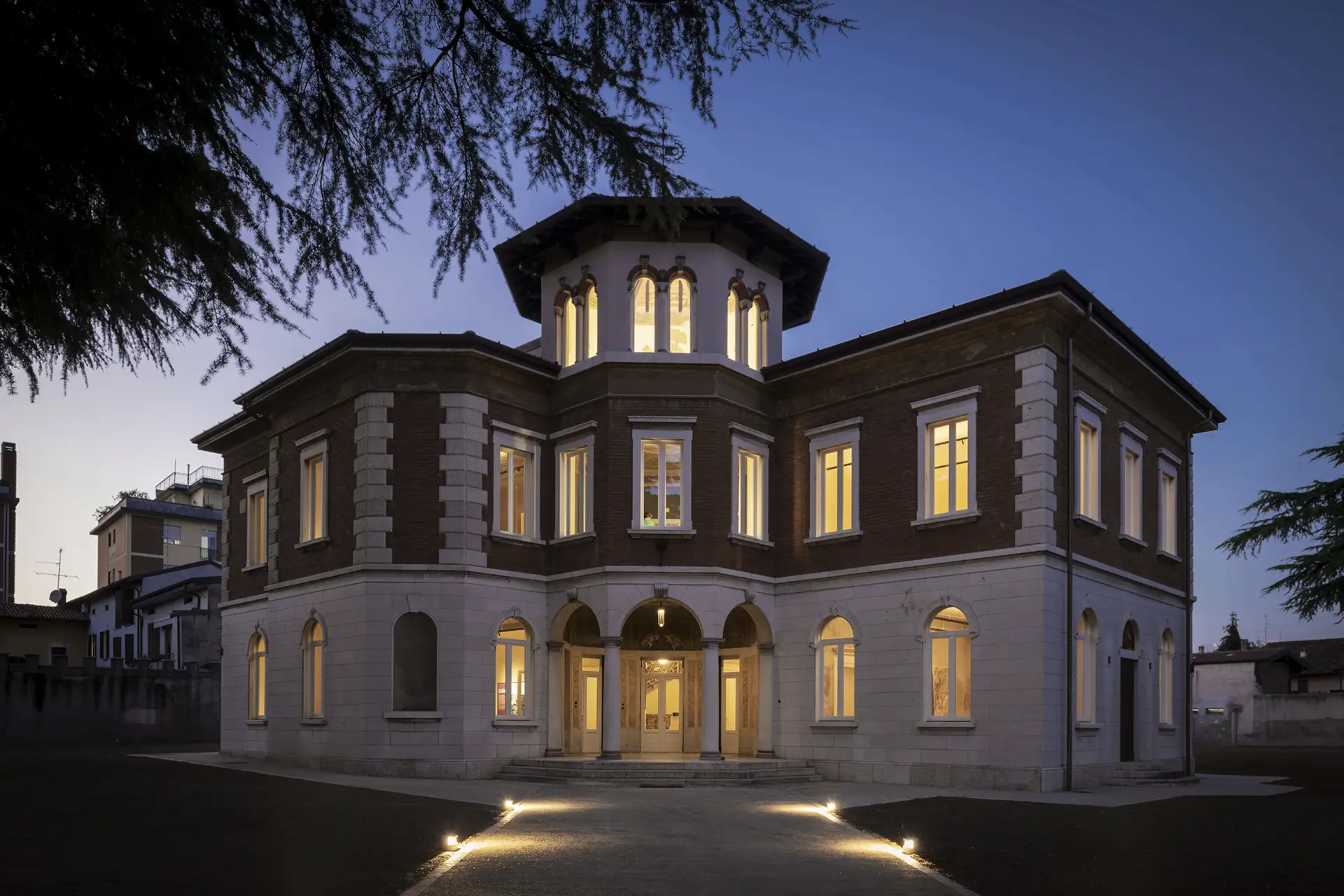
Museum of Oriental Art – Mazzocchi Collection
- Home
- /
- Arte e cultura
- /
- Hidden treasures
- /
- Museum of Oriental Art – Mazzocchi Collection
Pompeo Mazzocchi, his travels to the East and the birth of the collection
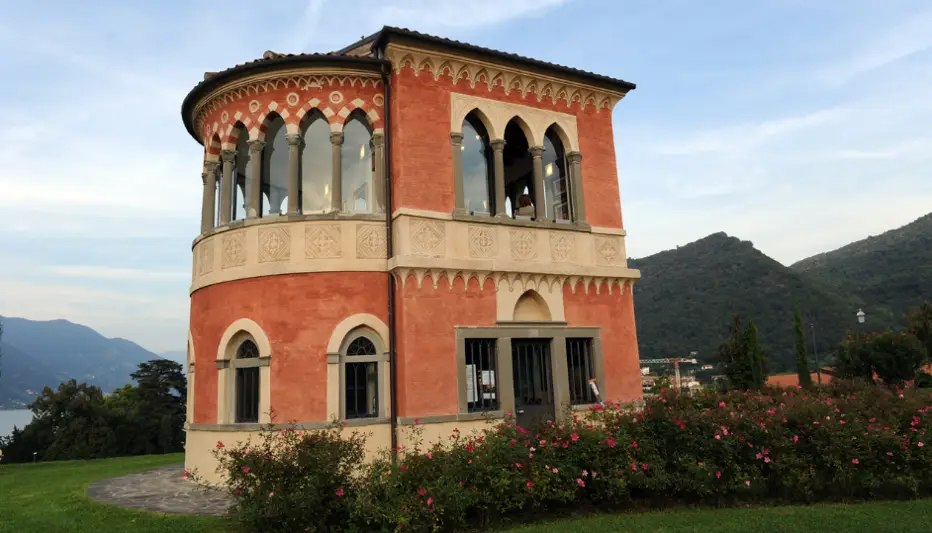
The Museum of Oriental Art, part of the larger Mazzocchi Foundation, owes its name to the collector Pompeo Mazzocchi (July 8, 1829 – April 7, 1915), a well-traveled figure who, in the midst of the 19th century, when a terrible disease had struck silk cocoons and threatened Lombardy’s silk production, managed to import the precious silkworm from the East, thus saving the region’s production. From his diary, published posthumously in 2010, we learn that the entrepreneur made at least fourteen trips to the East between 1864 and 1880, traveling between Korea, China, and Japan, in search of the precious silkworm. He also acquired numerous art objects, thus building a valuable collection.
The Collection: Japanese Artifacts and Donations to the Community
Mazzocchi’s eclectic collection included a wide variety of artifacts, from porcelain to weapons, lacquerware, woodwork, prints, jewelry, paintings, and ceramics, mostly Japanese art, which the entrepreneur acquired primarily at the Kyoto market, the most important art market of the time. The Museum’s collection, donated to the community in 1961 by Pompey’s son, Cesare, is dedicated to Japanese artifacts, dating from the 16th to the 18th centuries.
The exhibition route and the room of the journey to the East
The museum, which retraces Pompeo Mazzocchi’s adventurous travels to the East, is divided into four thematic sections, beginning with the room dedicated to the theme of the journey to the East, with a photographic portrait of Mazzocchi himself and his wife in oriental dress, accompanied by his travel documents.
Imperial Japan: Samurai, Armor, Tsuba, and Hiroshige Prints
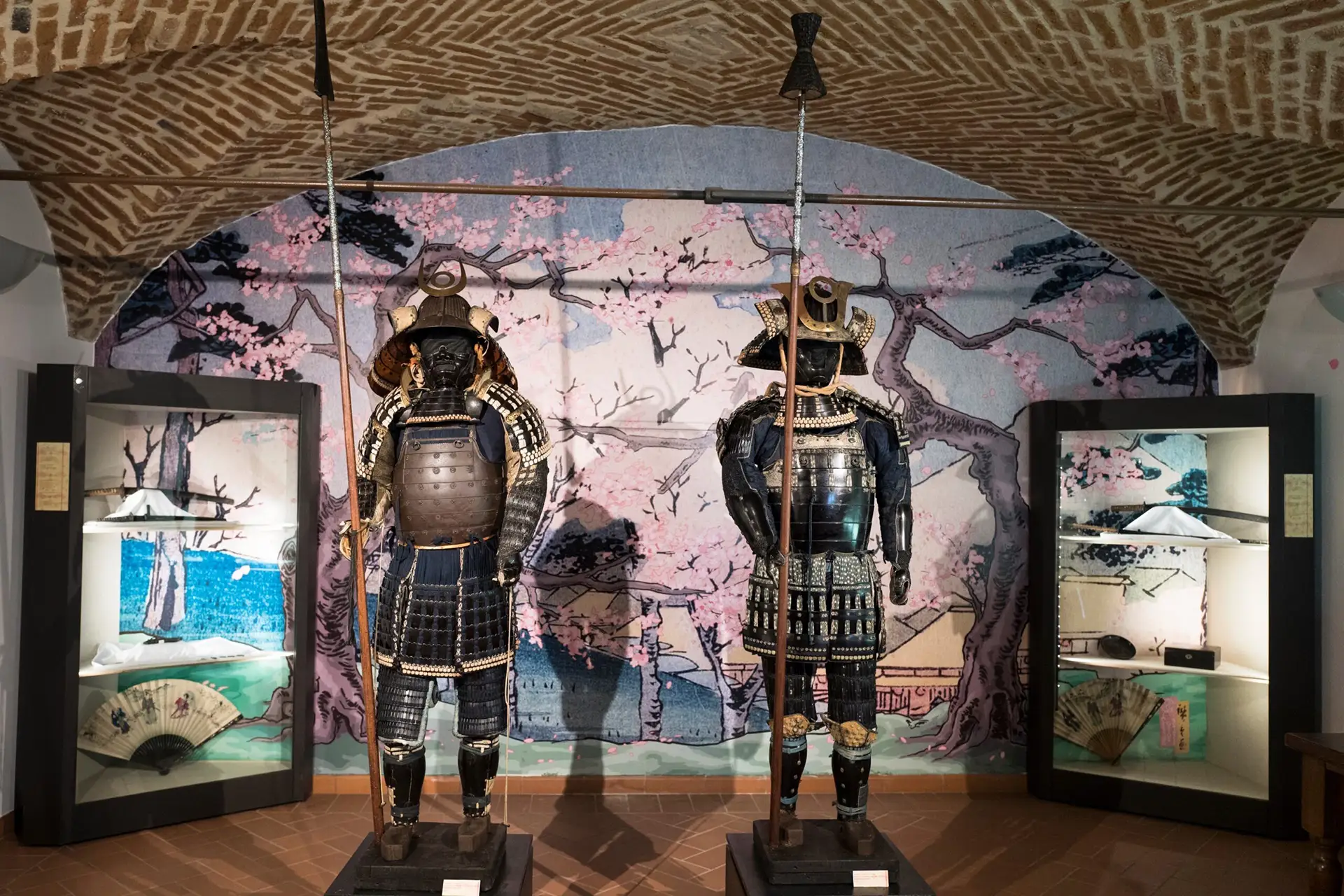
The second room focuses on the historical and social context of imperial Japan and the samurai caste, noble members of the military hierarchy. Two striking complete samurai armors, dating from the 18th and 19th centuries, are on display here. Particularly noteworthy examples in the collection are the tsuba, a term meaning sword hilt: a small weapon intended for children. The exhibition is enriched by a series of prints attributed to Hiroshige (Edo 1797-1858), one of the greatest engravers and landscape painters of nineteenth-century Japan.
Daily Life and the Arts of Japan: Netsuke, Mechanical Objects, and Hokusai’s Notebooks
The third room is dedicated to daily life in Japanese culture, displaying highly interesting and valuable artifacts, such as small lacquered wooden household objects and netsuke, small traditional Japanese ivory figurines related to mythological or naturalistic themes. Curious mechanical objects are also included, such as the small aquarium with a glass, ivory, and lacquer lid containing moving turtles, a work of great material and technical excellence. The section is rounded out by the magnificent notebooks of the great artist Hokusai, a leading exponent of 19th-century art and a master of ukiyo-e, Japanese art prints.
Links and useful information


Visiting Hours: Visits by appointment
Ticket Price: €5 full price, €3 reduced price
Privately owned property