Lana Berlucchi Palace
- Home
- /
- Arte e cultura
- /
- Castles
- /
- Lana Berlucchi Palace
17th-century origins and subsequent transformations
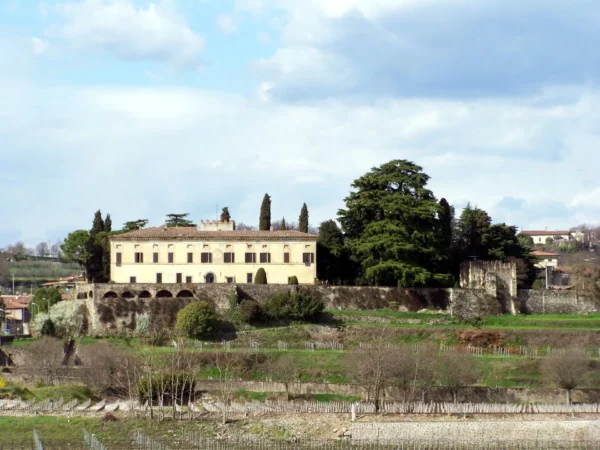
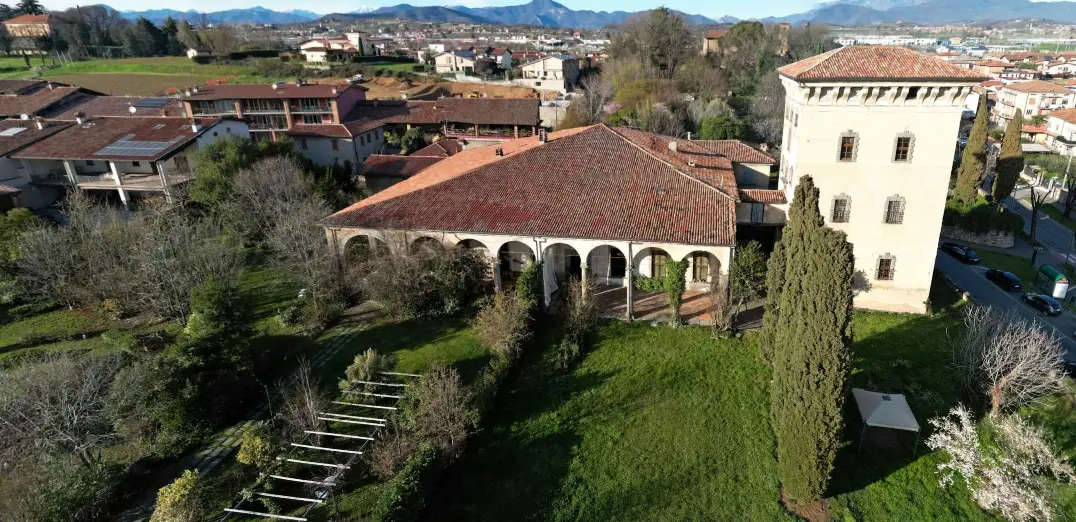
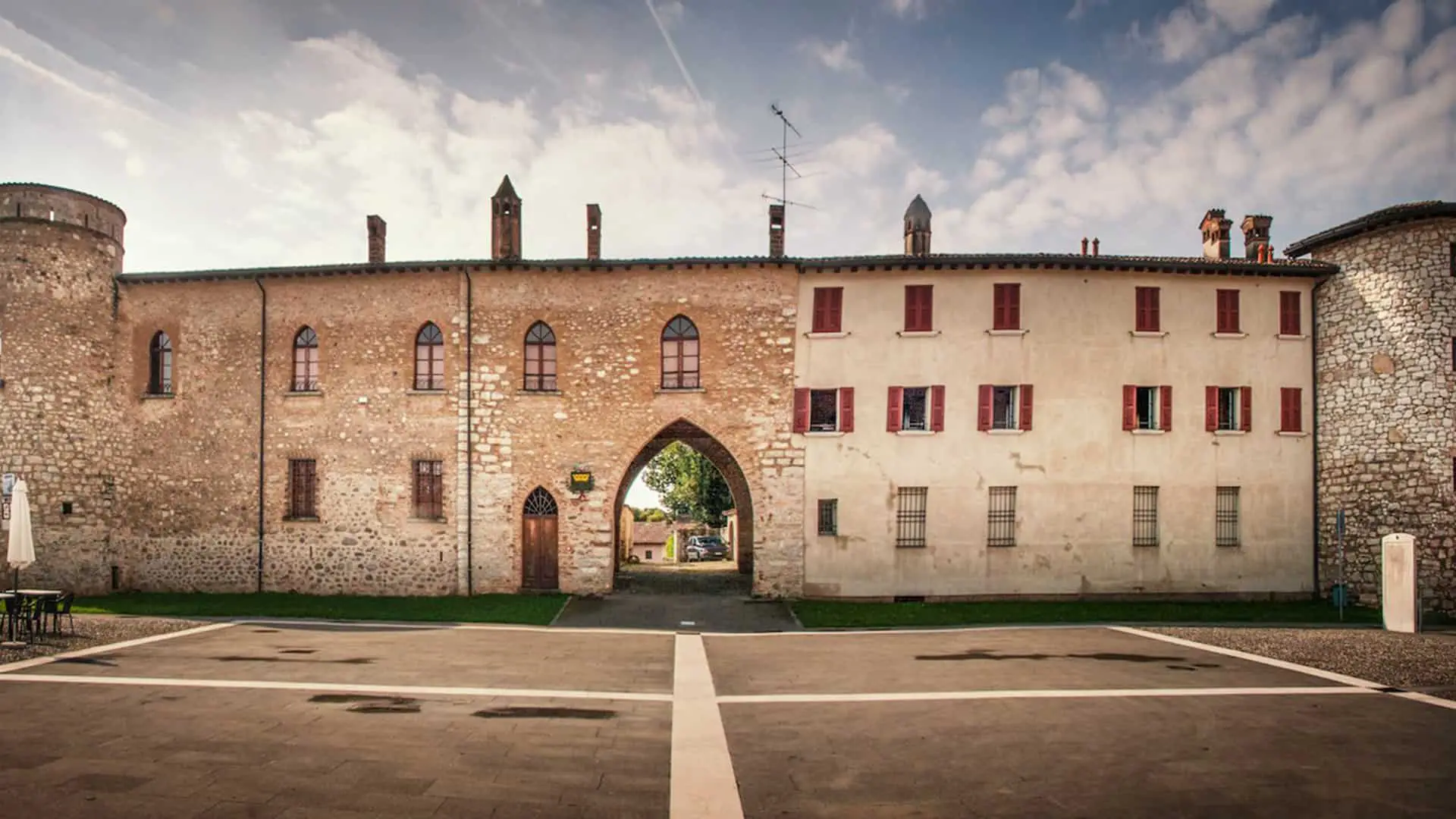
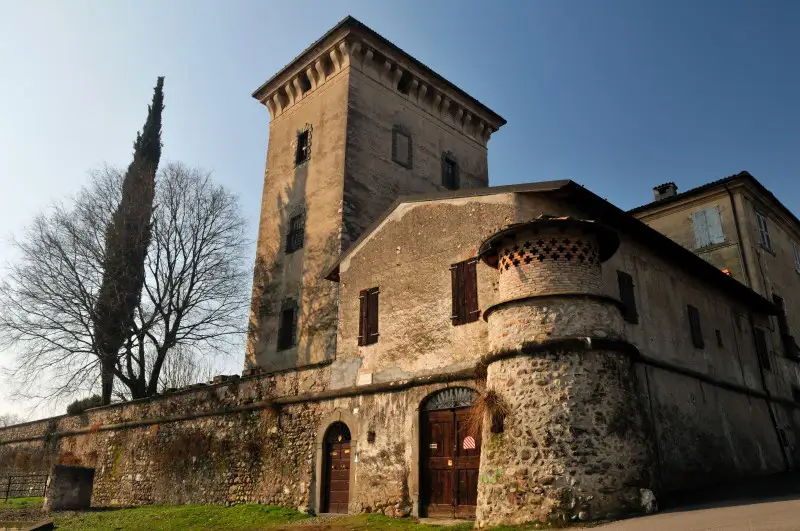
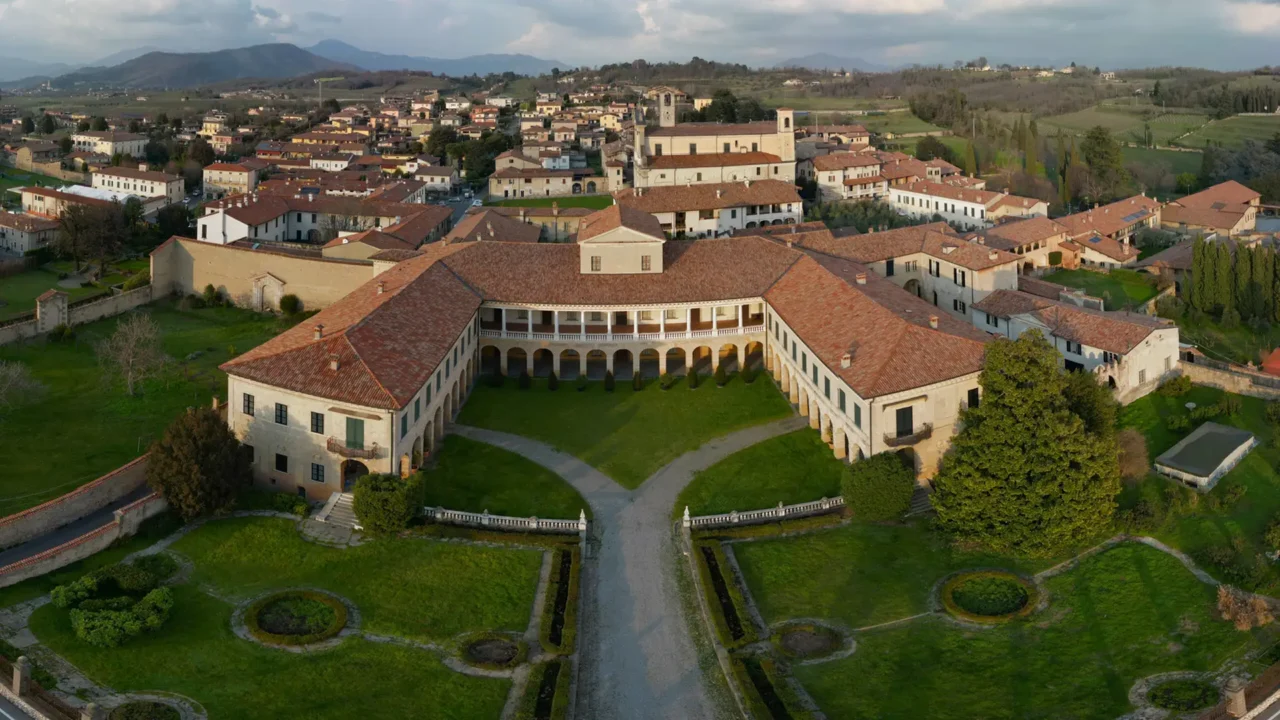
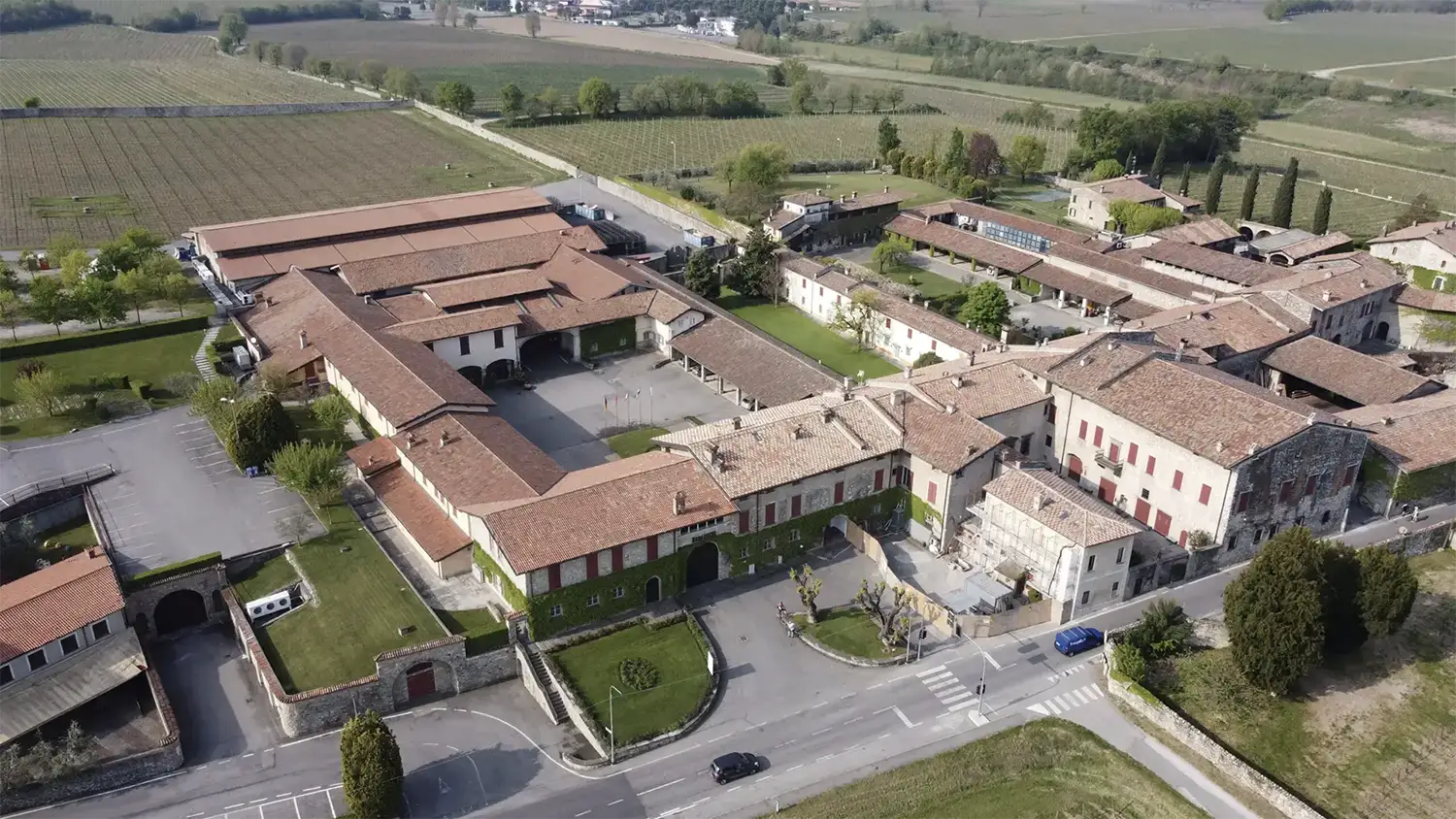
Like other stately homes in the area, characterised by a rich architectural history, Palazzo Torri in Nigoline di Corte Franca was first built in the mid-17th century, linked to the Federici della Corte family, and was subsequently renovated in two major building projects.
18th-century alterations and a 19th-century dining room
The first major alteration, dating from the 18th century, was carried out by the Peroni family, who were keen to transform the 17th-century residence into a place of delight, brought up to the aesthetic standards of the time and in harmony with a lush garden. Perhaps it is to this earlier patronage that we owe certain similarities, still clearly visible, with the nearby Palazzo Monti della Corte, such as the L-shaped layout and the preference for exposed rusticated masonry. Another major building project was undertaken in the late nineteenth century at the behest of Paolina Calegari Torri (1856–1931), of whom a remarkable portrait remains inside the villa. The wife of the lawyer Alessandro Torri (1844–1917), Paolina Calegari altered the villa with the specific aim of turning it into the headquarters of a cultural salon, of which she would be the driving force and champion: it hosted leading figures from the Italian political and literary scene of the time, such as Giuseppe Zanardelli, Giosuè Carducci and Antonio Fogazzaro, as well as representatives of European artistic movements, such as Hugo Freiherr von Habermann, who had been president of the Munich Secession since 1904.
The inner courtyard, the portico and the roof terrace
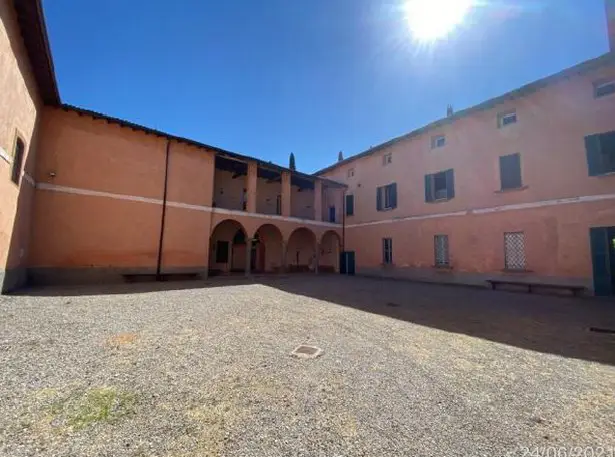
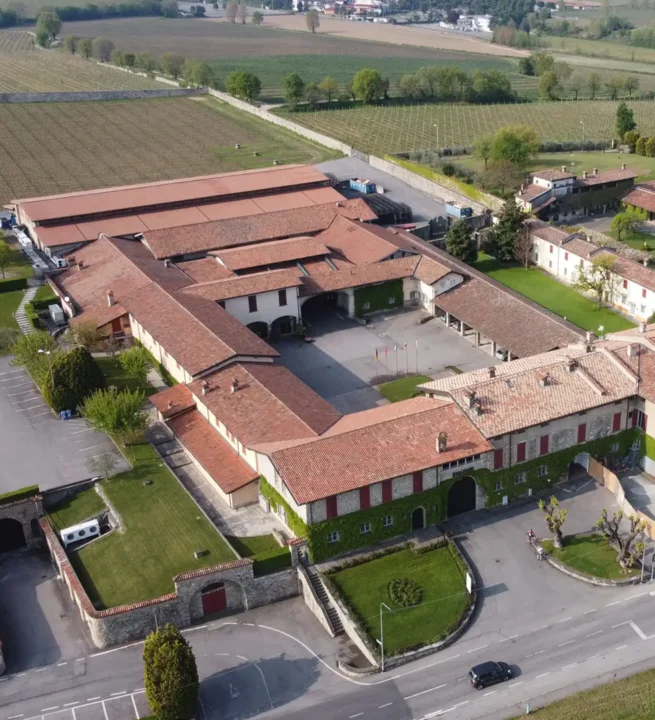
The inner courtyard is dominated by the façade of the villa, with a spacious portico of soaring proportions, supported by masonry columns and comprising five round-arched openings, surmounted by the windows of the piano nobile, which open, well spaced apart, onto the rusticated wall. At the top, the façade is crowned by a roof terrace, added during the nineteenth-century renovation. The fact that the portico is not symmetrically positioned at the centre of this side of the building has led to speculation that the original architectural design was not adhered to.
Interior decorations between the Diana Room and the State Room
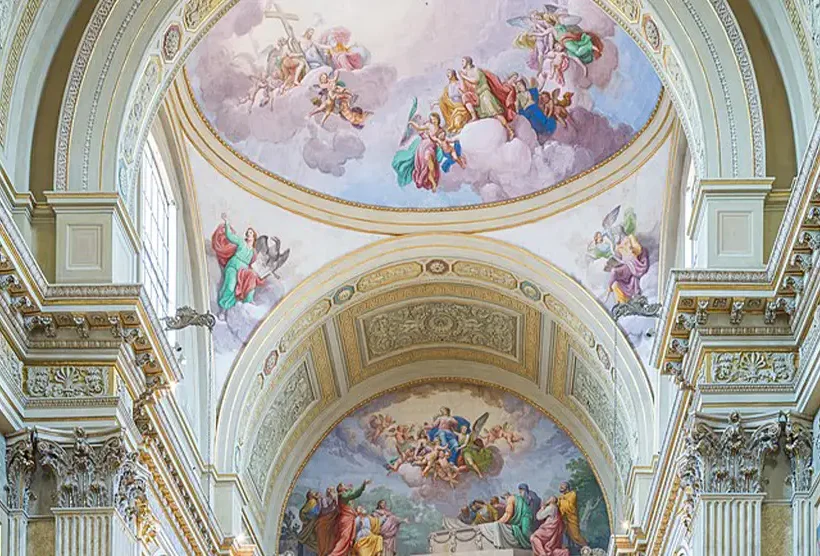
Inside, the villa still preserves fine 18th-century painted decorations, commissioned by the Peroni family: on the ground floor is the beautiful Sala della Caccia, which takes its name from the depiction of the musical instruments used during hunting expeditions. This activity is also evoked by the beautiful vault dominated by the figure of Diana, who is depicted armed with a bow and a quiver full of arrows, suspended on a throne of clouds and with the moon crowning her brow. The grand Reception Hall, which was certainly extensively altered during the nineteenth-century renovation, still features a large vault with non-figurative fresco decoration and a grand marble fireplace bearing the Torri family’s coat of arms.
The landscaped garden and the Deodara cedars
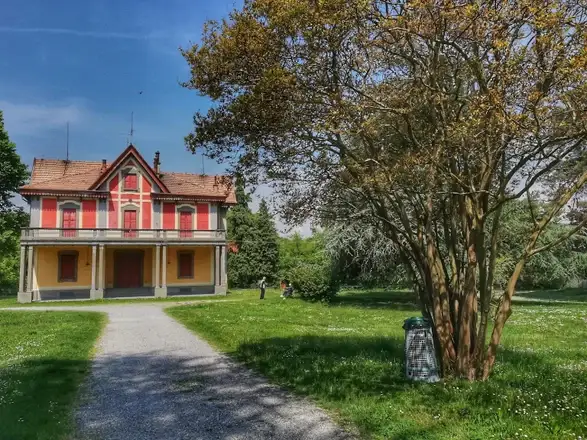
The entire complex is surrounded by a lush ‘landscape’ garden, devoid of formal flowerbeds and designed in accordance with the standards established in England as early as the mid-18th century: a garden so free from man-made boundaries that it blends seamlessly with the surrounding greenery, dominated by large, centuries-old Deodara cedars.
Links and useful information


Opening hours: open for visits and tastings
Privately owned property