Quistini Castle
- Home
- /
- Arte e cultura
- /
- Castles
- /
- Quistini Castle
The origins of Quistini Castle and changes in ownership between the 17th and 18th centuries
Despite its evocative name, the manor now known as Castello Quistini dates from a period well after the Middle Ages: it was in fact built shortly after the mid-16th century by Ottaviano Porcellaga as a second residence, to complement the Castello di Rovato, where he lived permanently. From the 17th century, the palace was acquired first by the Roncalli family and then, from the early 18th century, by the Quistini family, to whom it owes its name.
A late 16th-century castle built in the style of a fortified structure
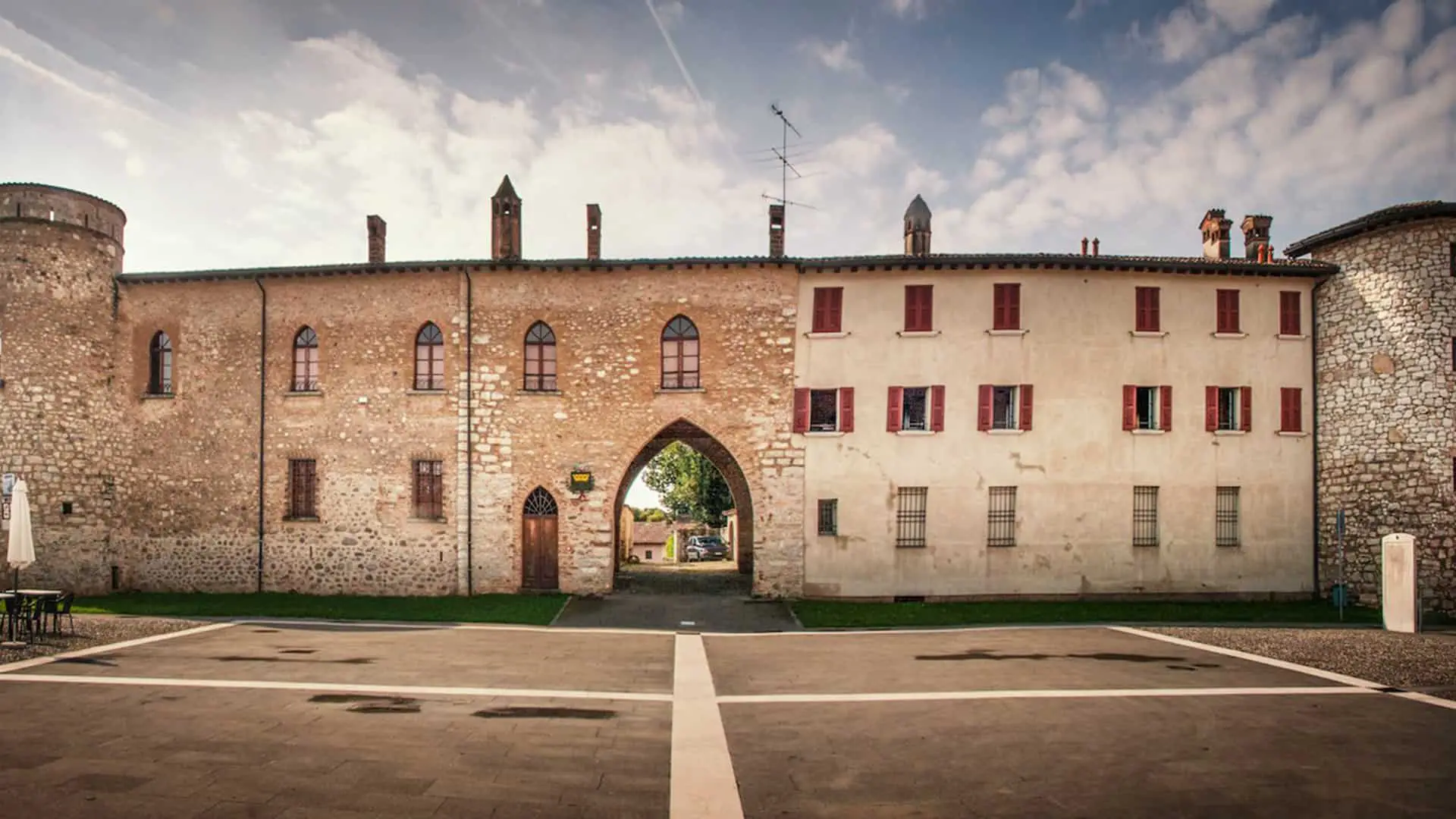
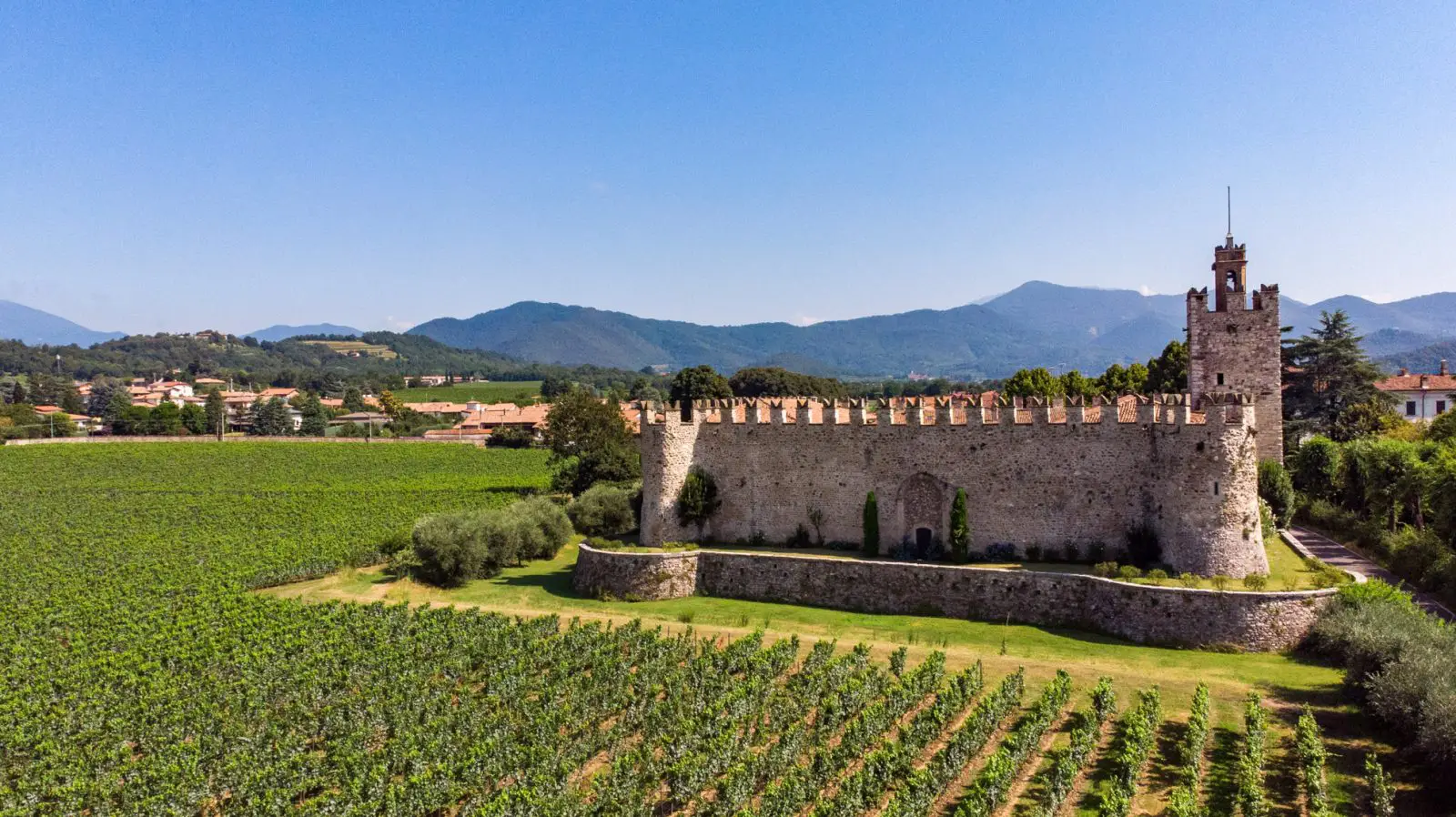
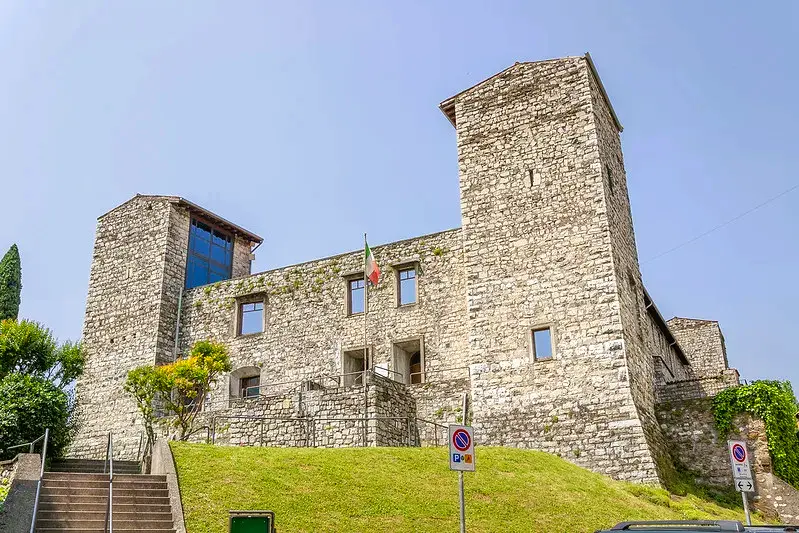
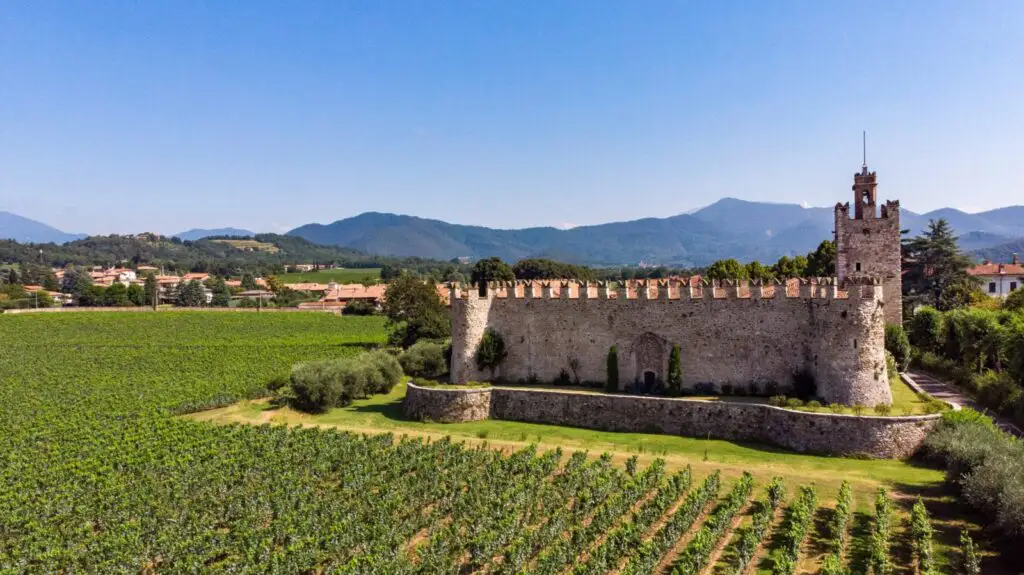
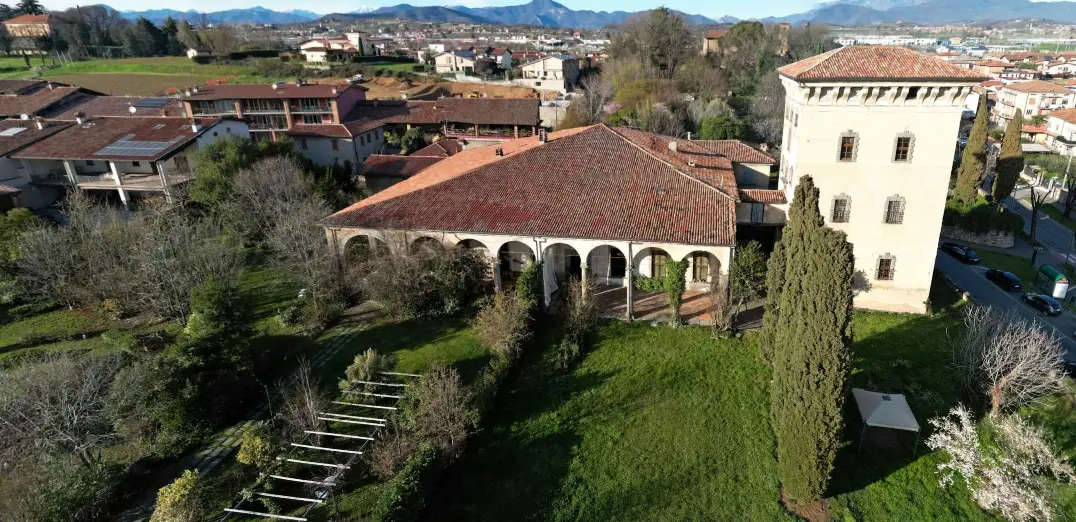
Although the building therefore dates from the late 16th century, it was designed in the style of a traditional fortified castle: this is evident in the outer walls, which are pentagonal in shape and feature towers. These towers have a scarped base, that is, a sloping wall resting against the main wall, which served to reinforce the castle’s foundations and keep enemies at a safe distance from the main walls.
The keep-style tower, Renaissance modillions and the Sarnico stone portal
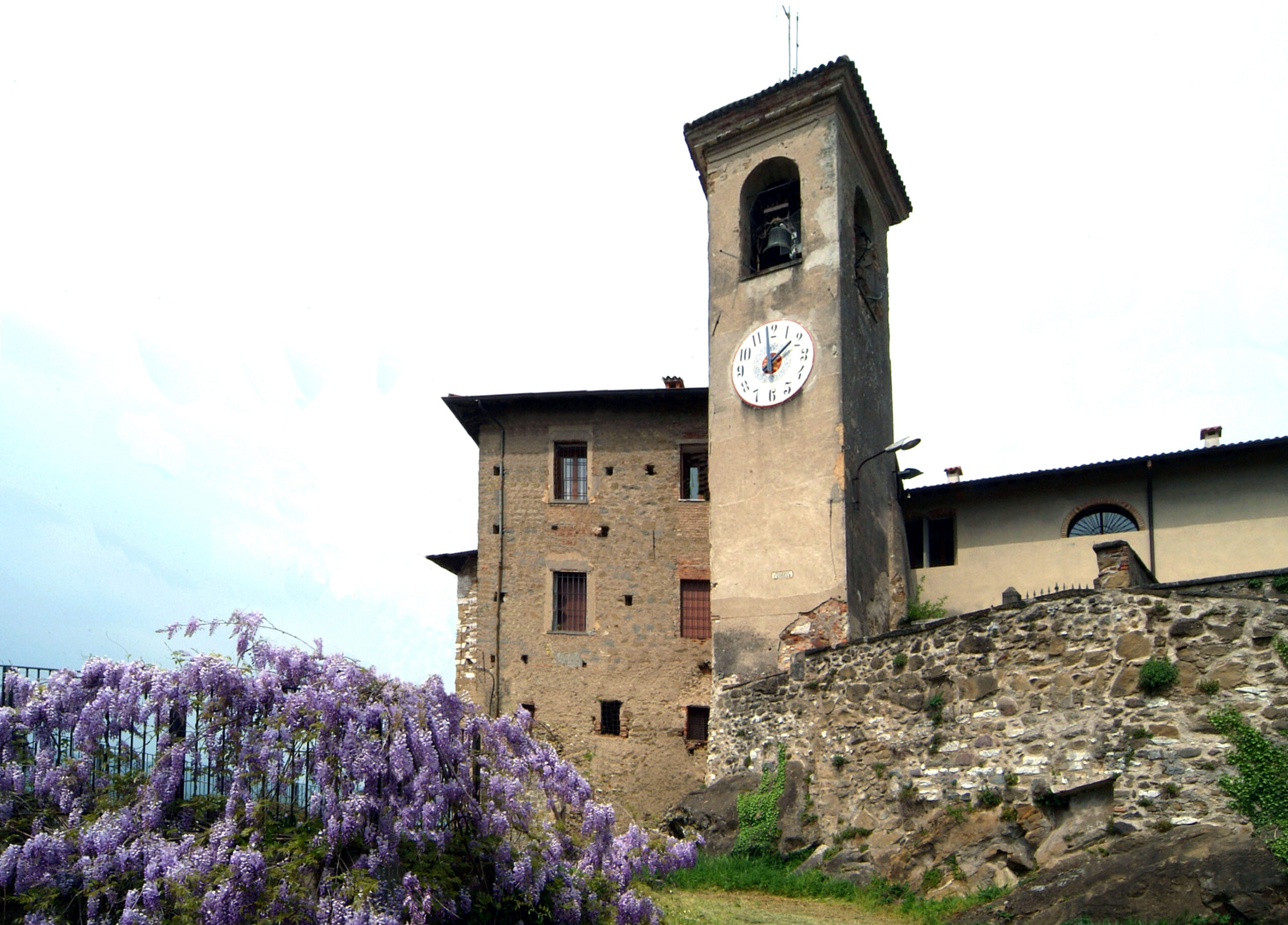
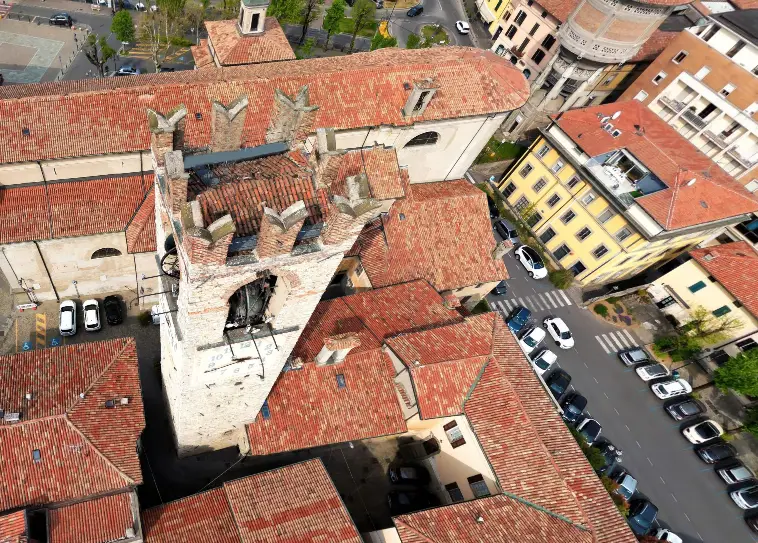
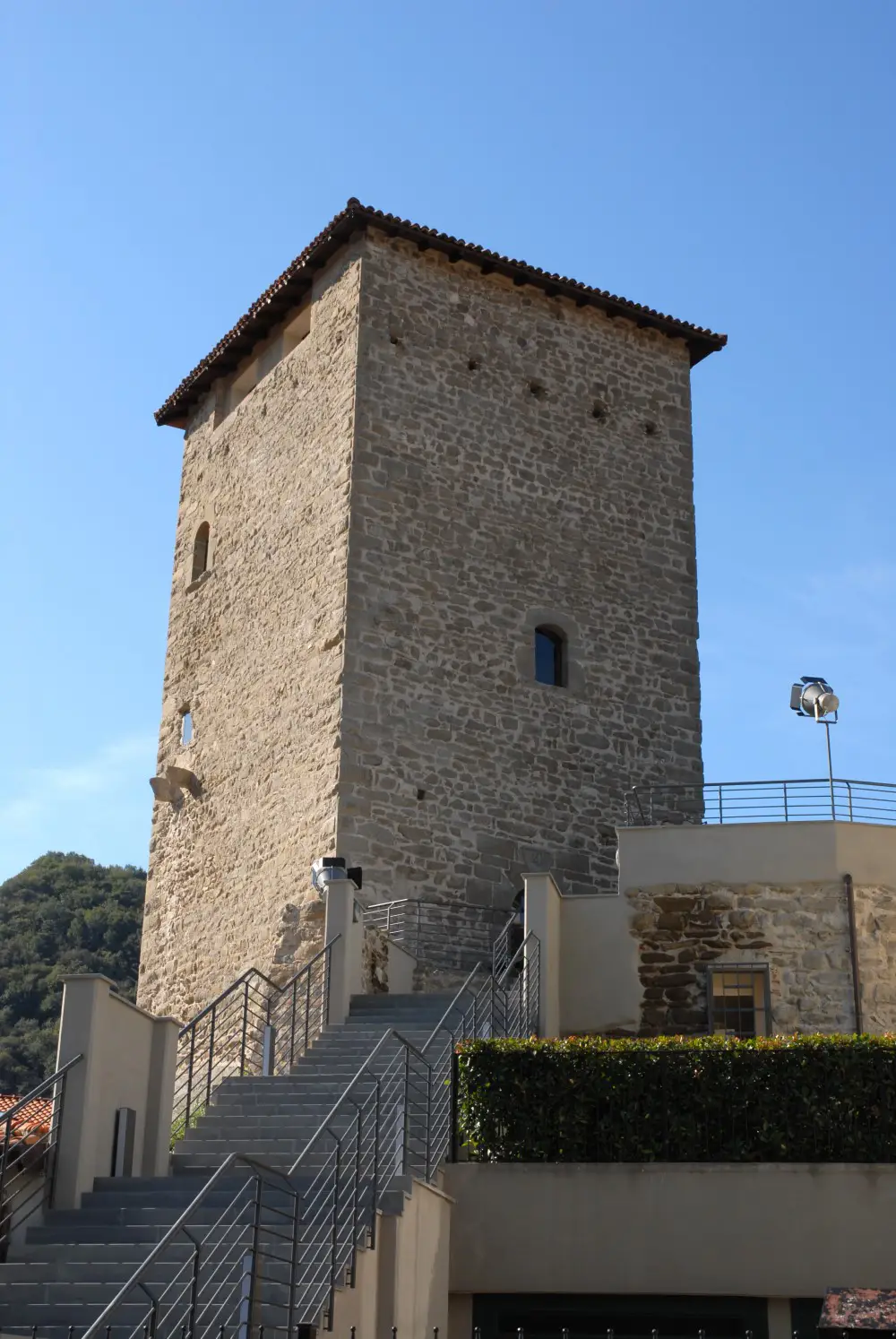
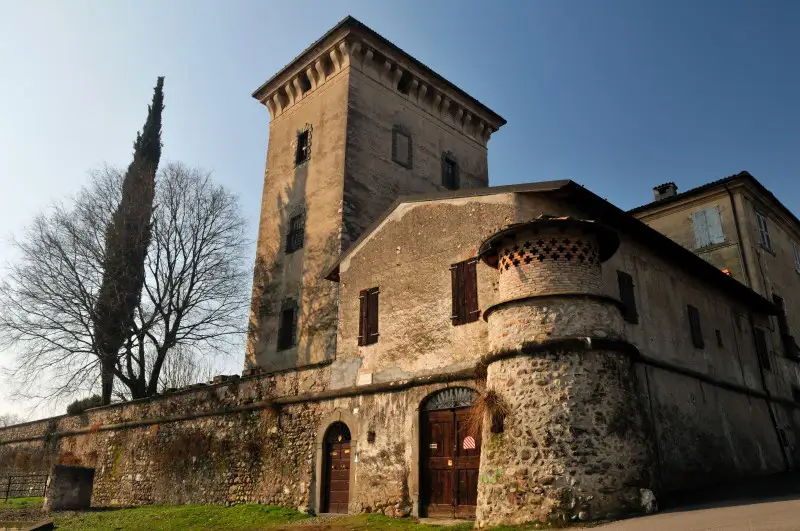
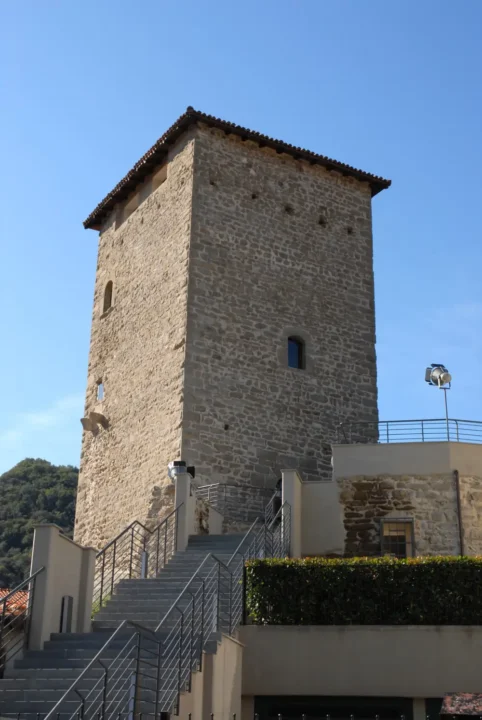
The four-storey tower, situated on the north-eastern side of the castle, is also of ancient origin: a defining feature of the entire structure, it still evokes, in both its function and its austere appearance, the medieval keep—the last line of defence in the event of a siege, as well as the lord’s residence and a symbol of his power over the territory. The decorative element of the projecting corbels, crowning the square structure, however, reflects a fully Renaissance style, as does the portal, constructed from local stone, Sarnico stone, with its characteristic grey colour.
The portico and the concept of a dwelling situated between leisure and landscape
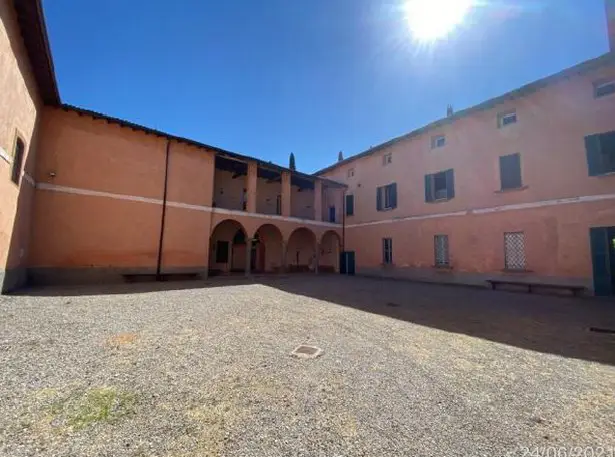
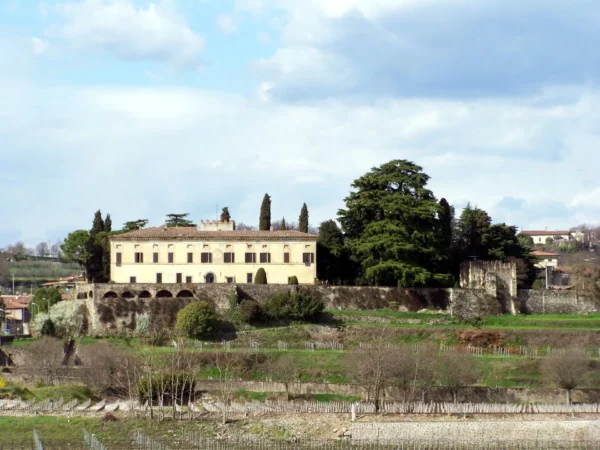
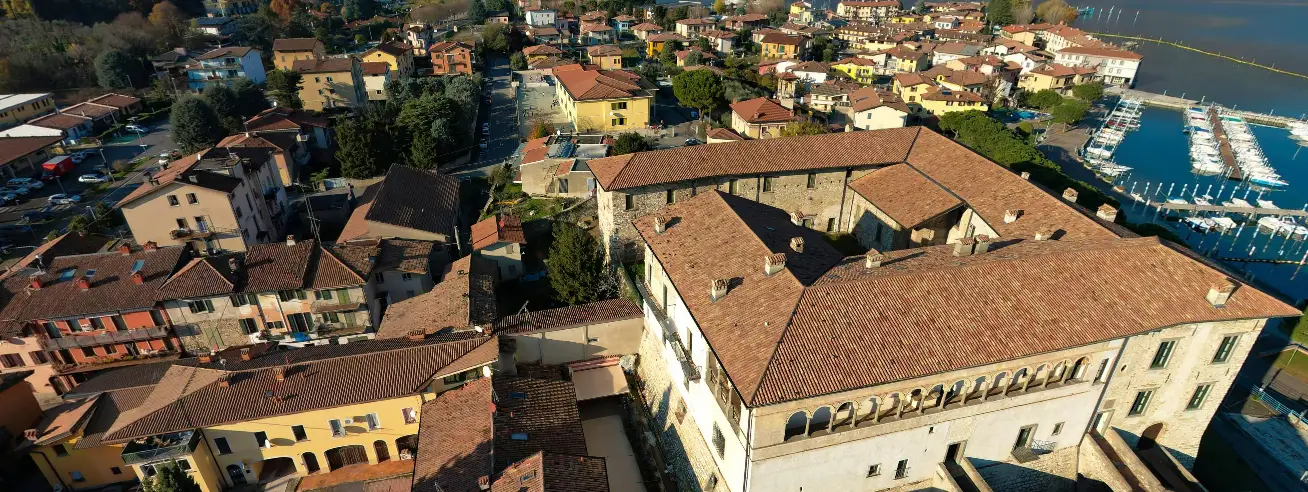
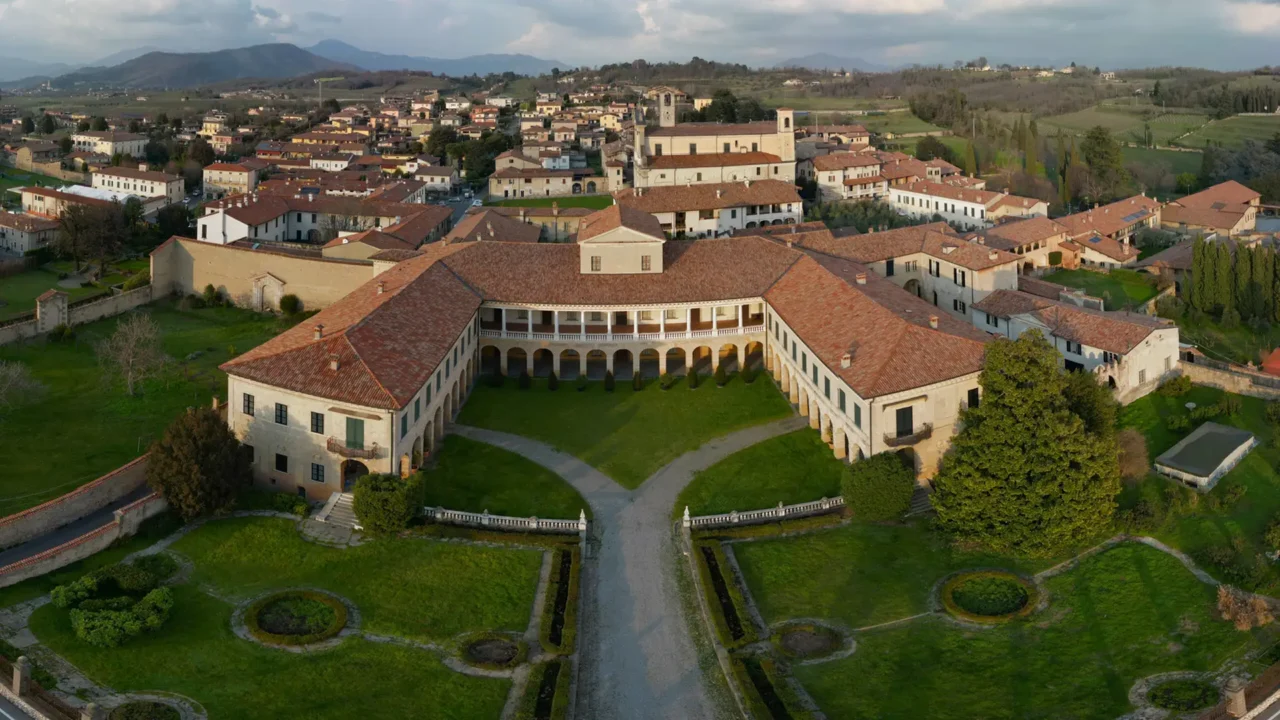
The façade, with its airy portico featuring round-arched openings, where traces of fresco decoration can still be seen, evokes the idea of a residence as a place of pleasure and leisure. The palace, perfectly integrated into the surrounding landscape, thus entered into a dialogue with the natural beauty of the area, as befitted the stately villas of the Venetian hinterland, brought up to date with the standards of the new architectural treatises and capable of meeting the ruling class’s need for suitable residences that reflected the image of a nobility actively managing its landholdings.
Links and useful information


Not open to the public