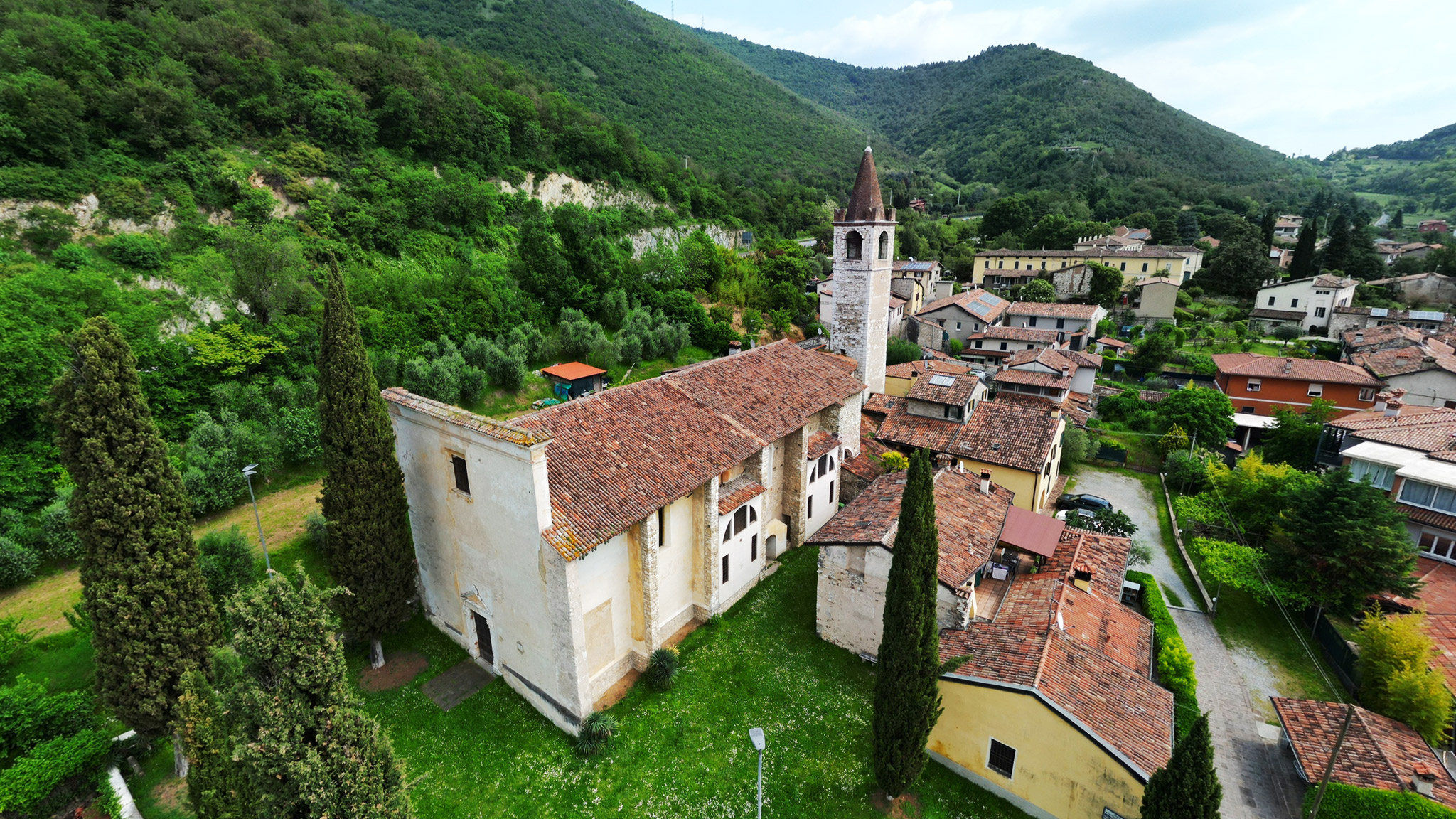
Parish Church of Maria Vecchia
- Home
- /
- Arte e cultura
- /
- Parish Churches and Sanctuaries
- /
- Parish Church of Maria Vecchia
The Parish Church of Santa Maria Assunta: the oldest building in Gussago, situated between Franciacorta and Lake Iseo
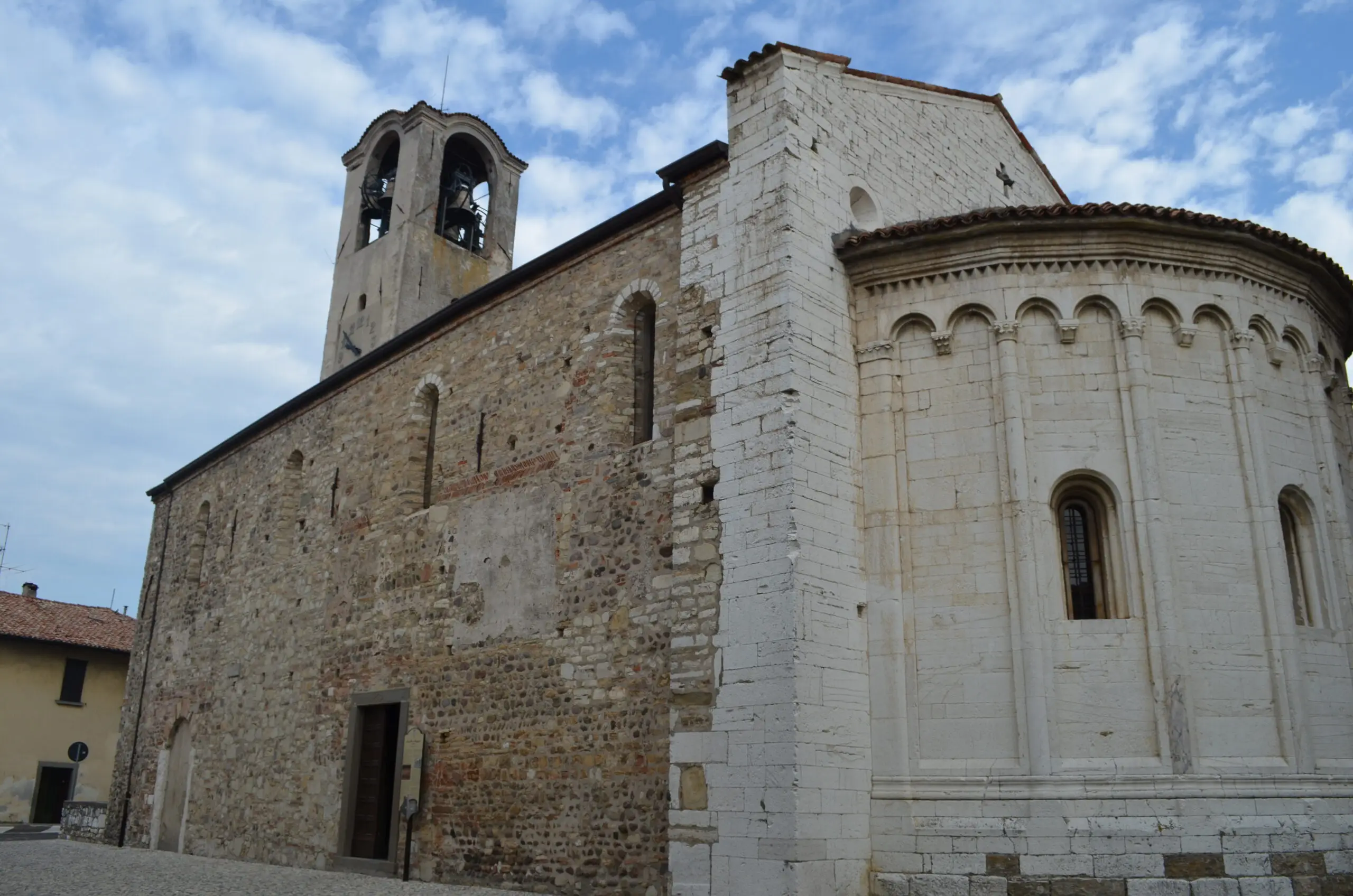
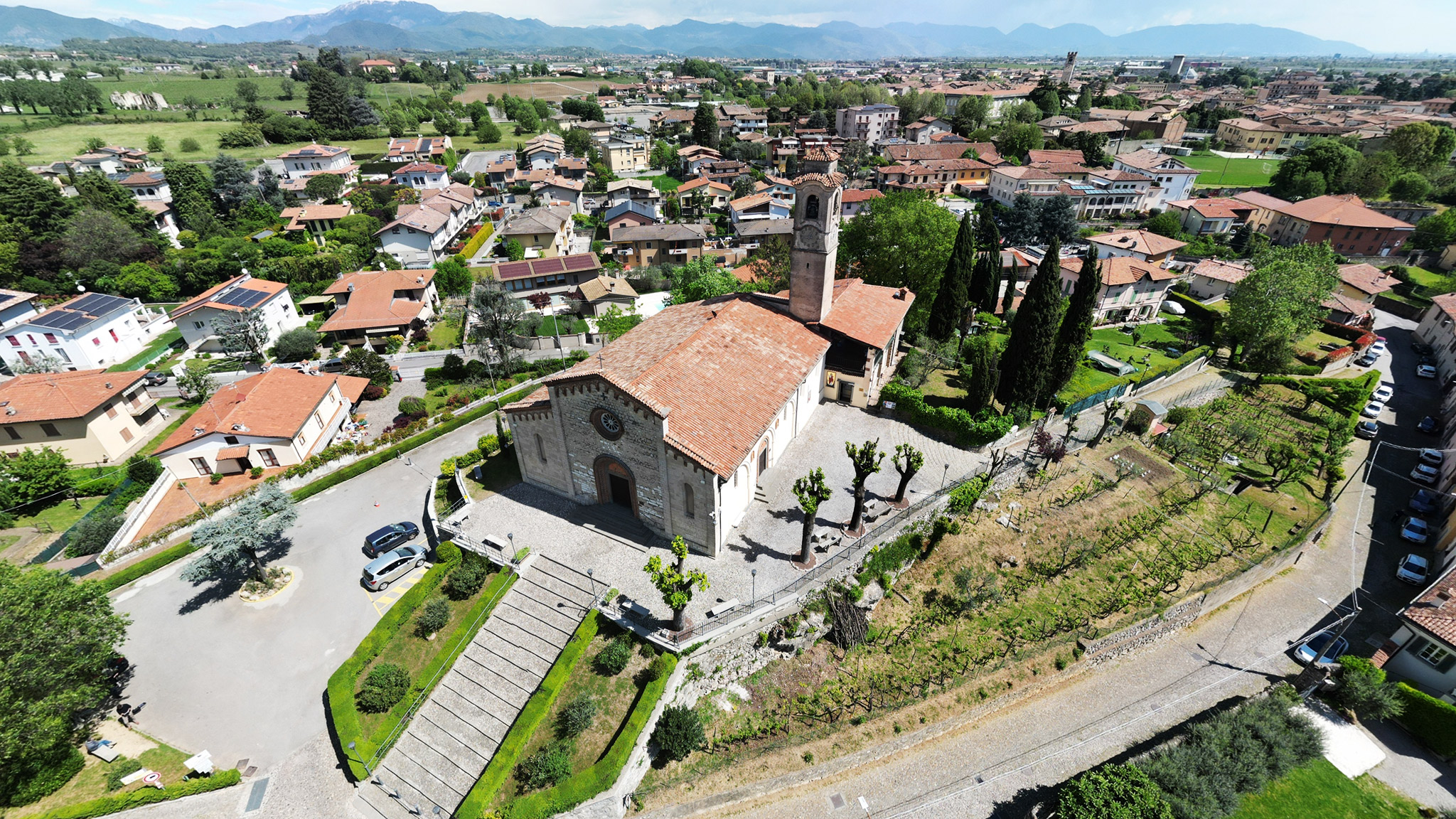
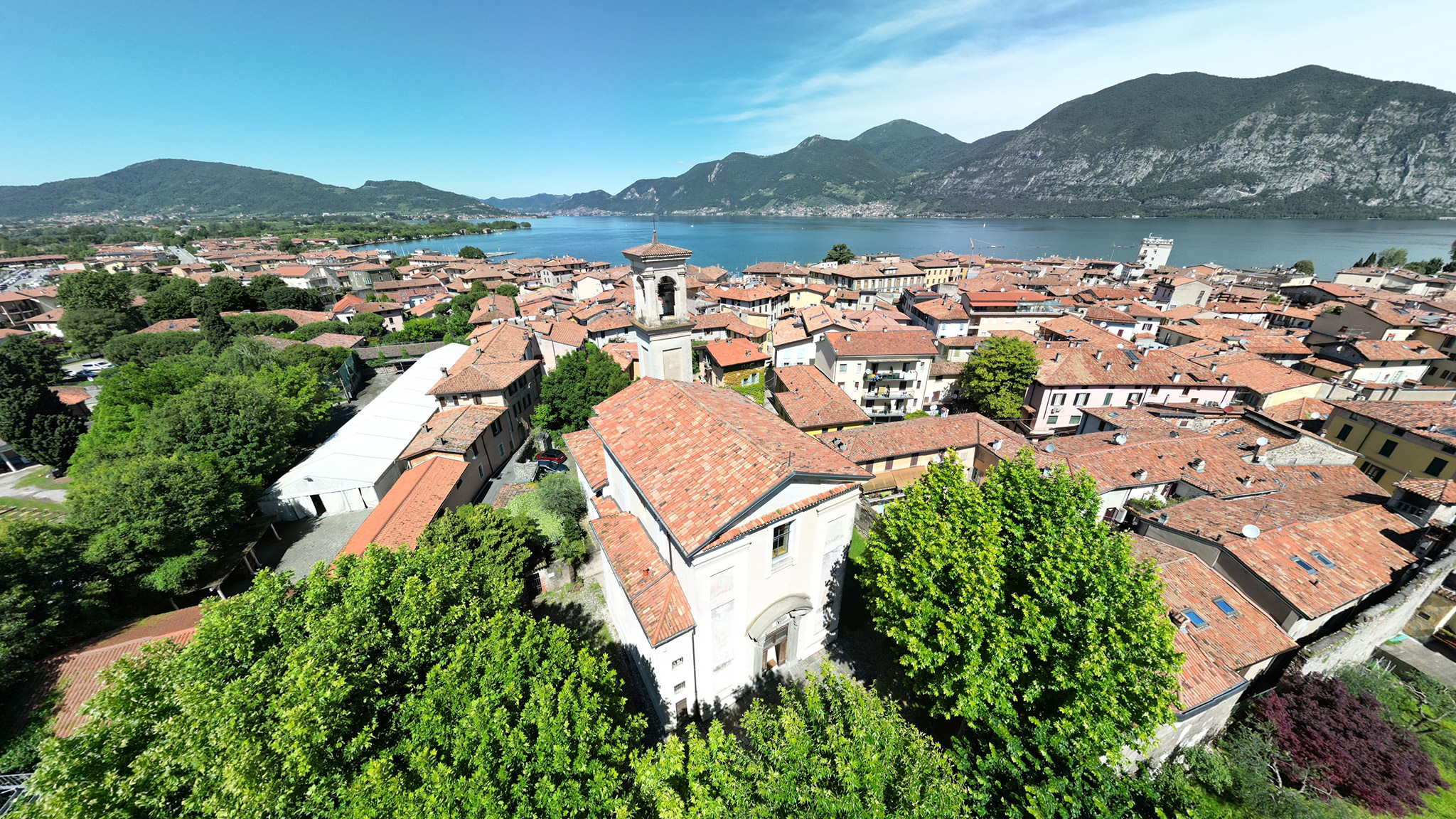
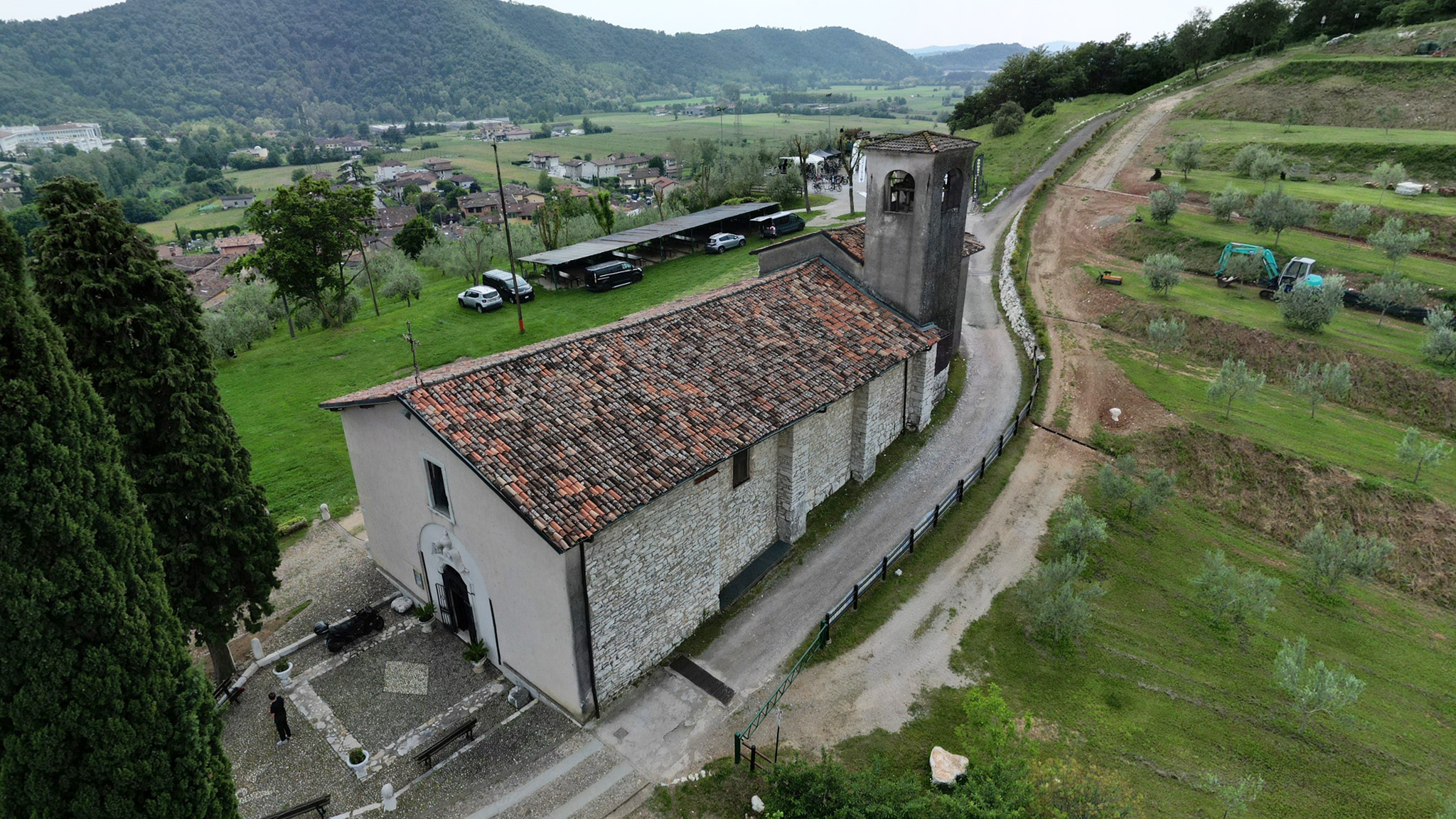
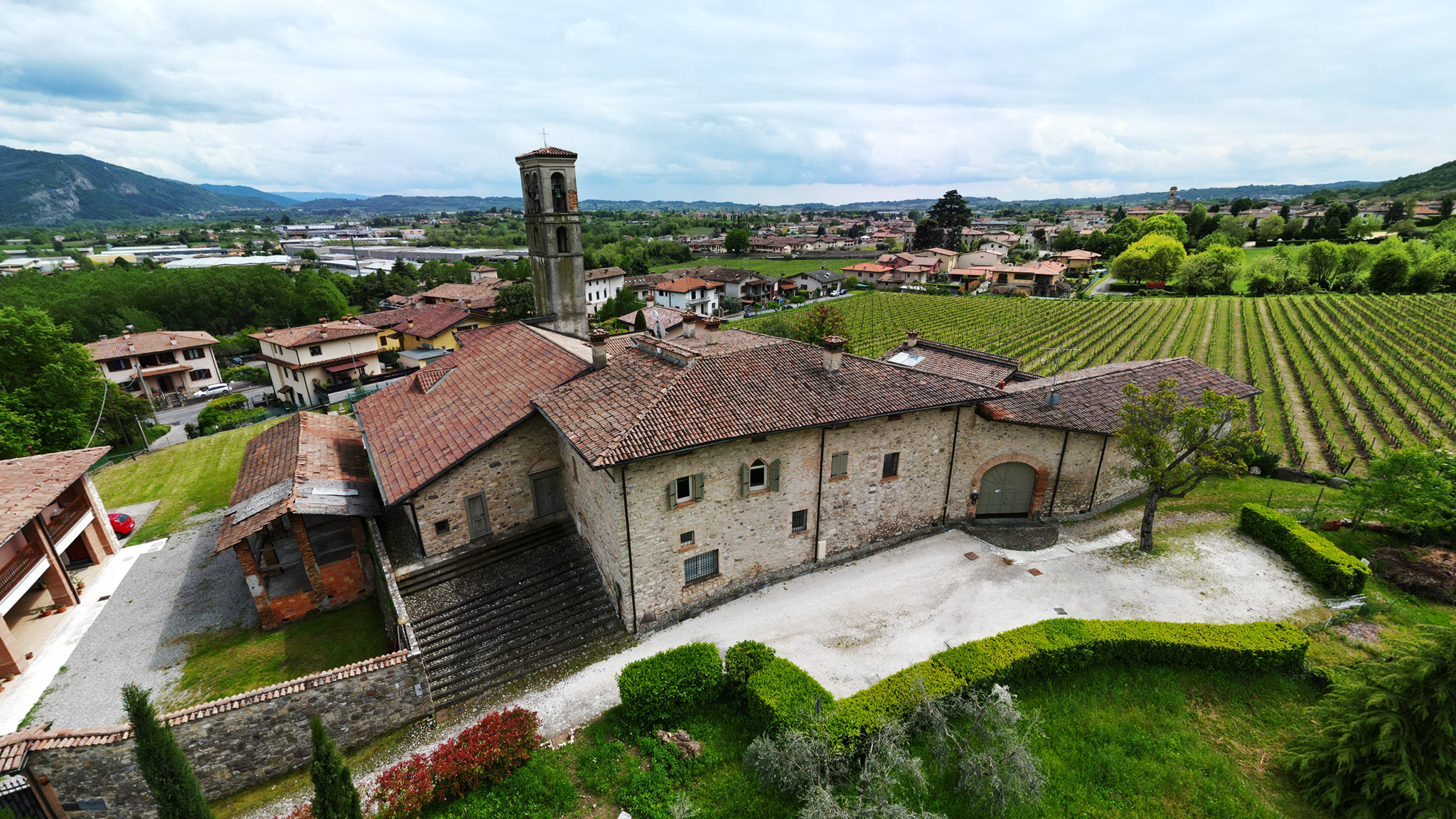
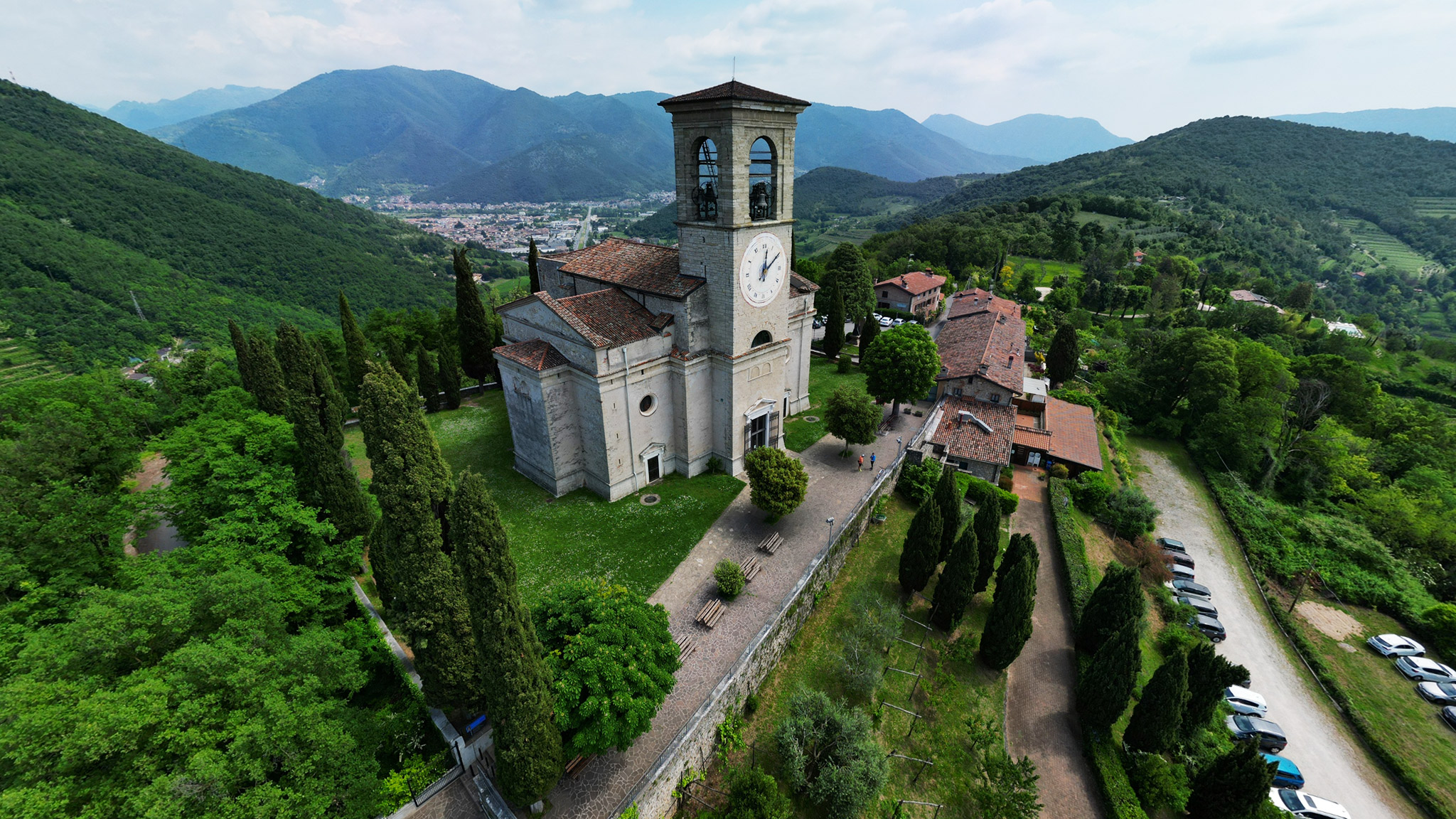
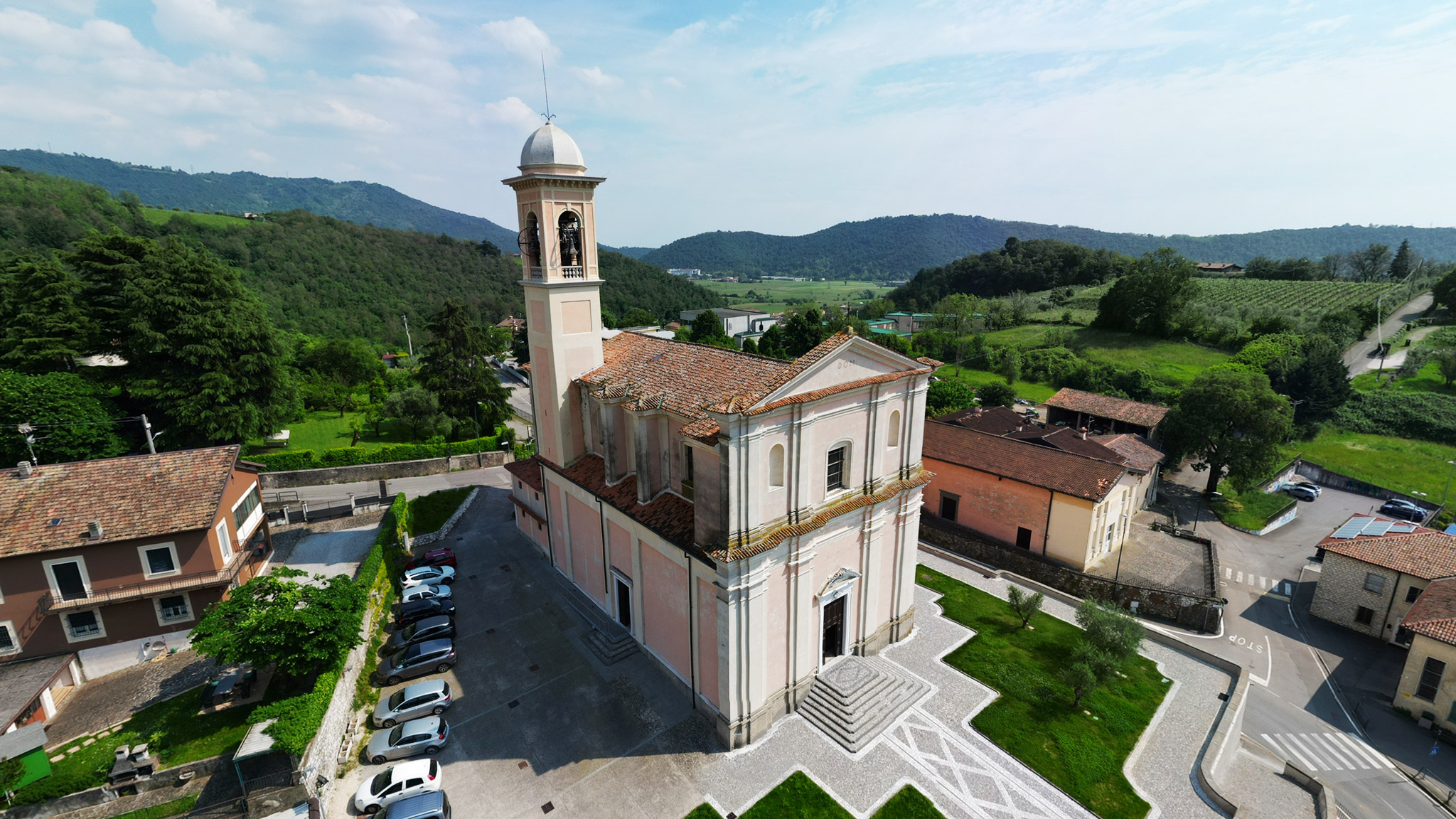
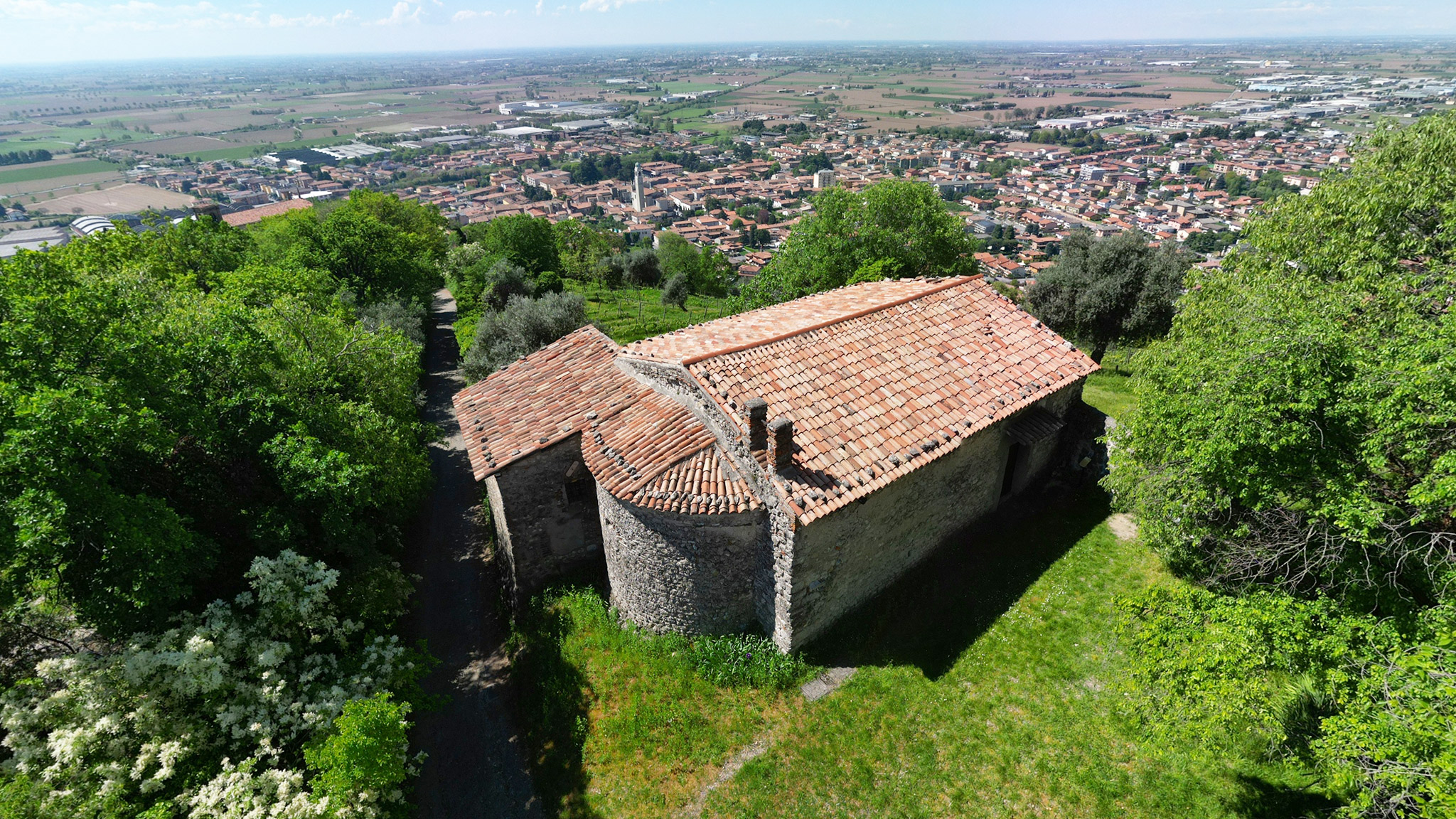
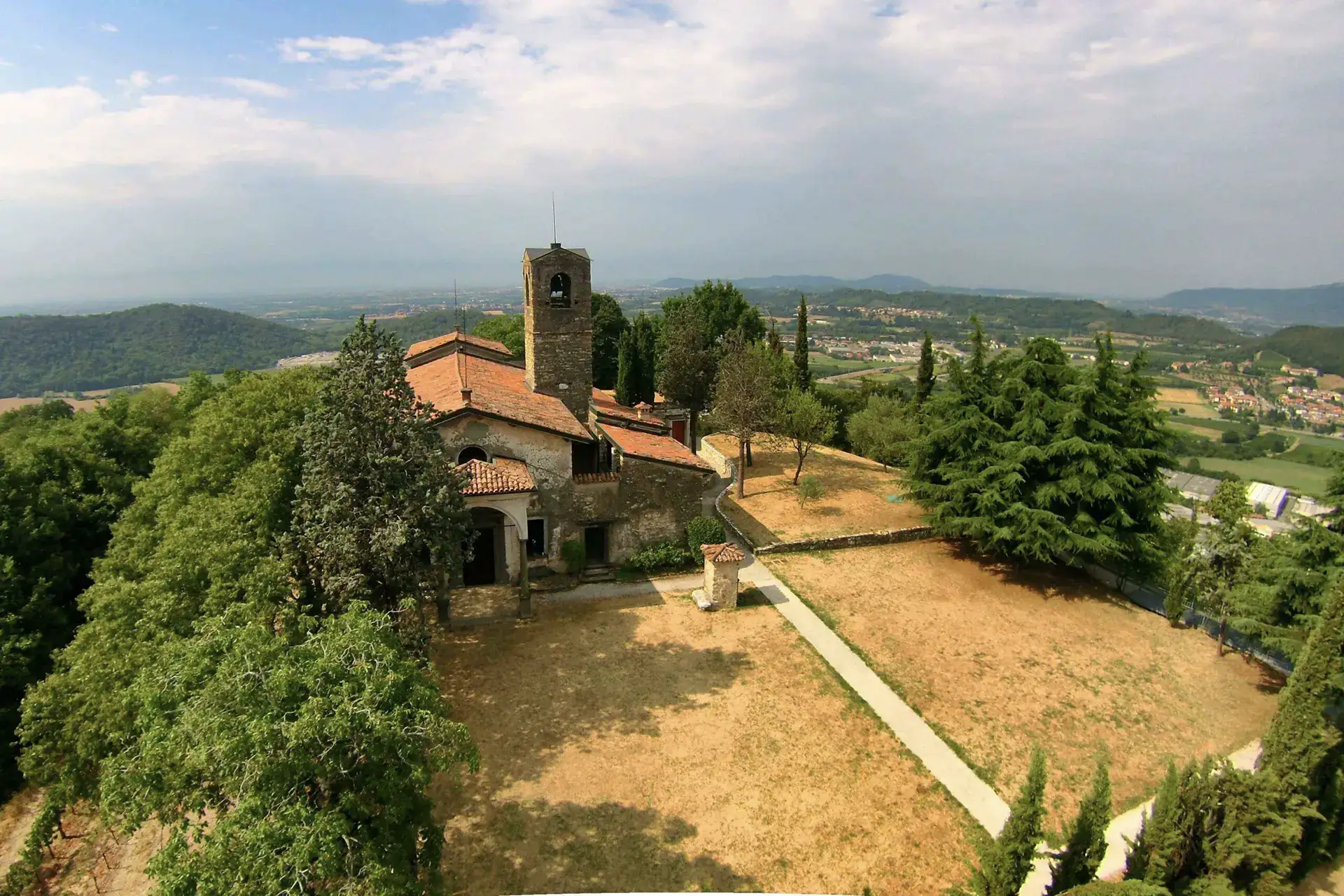
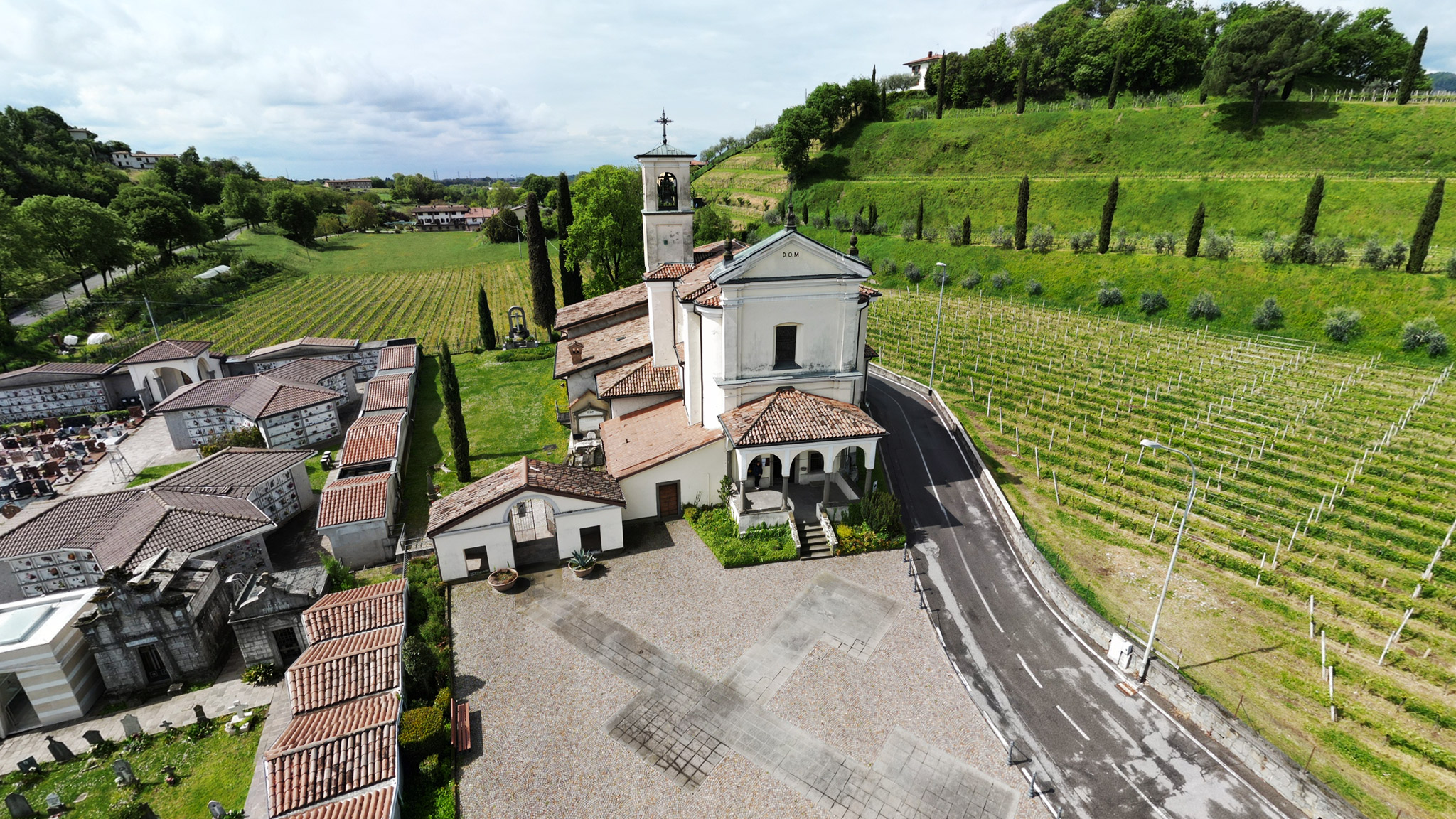
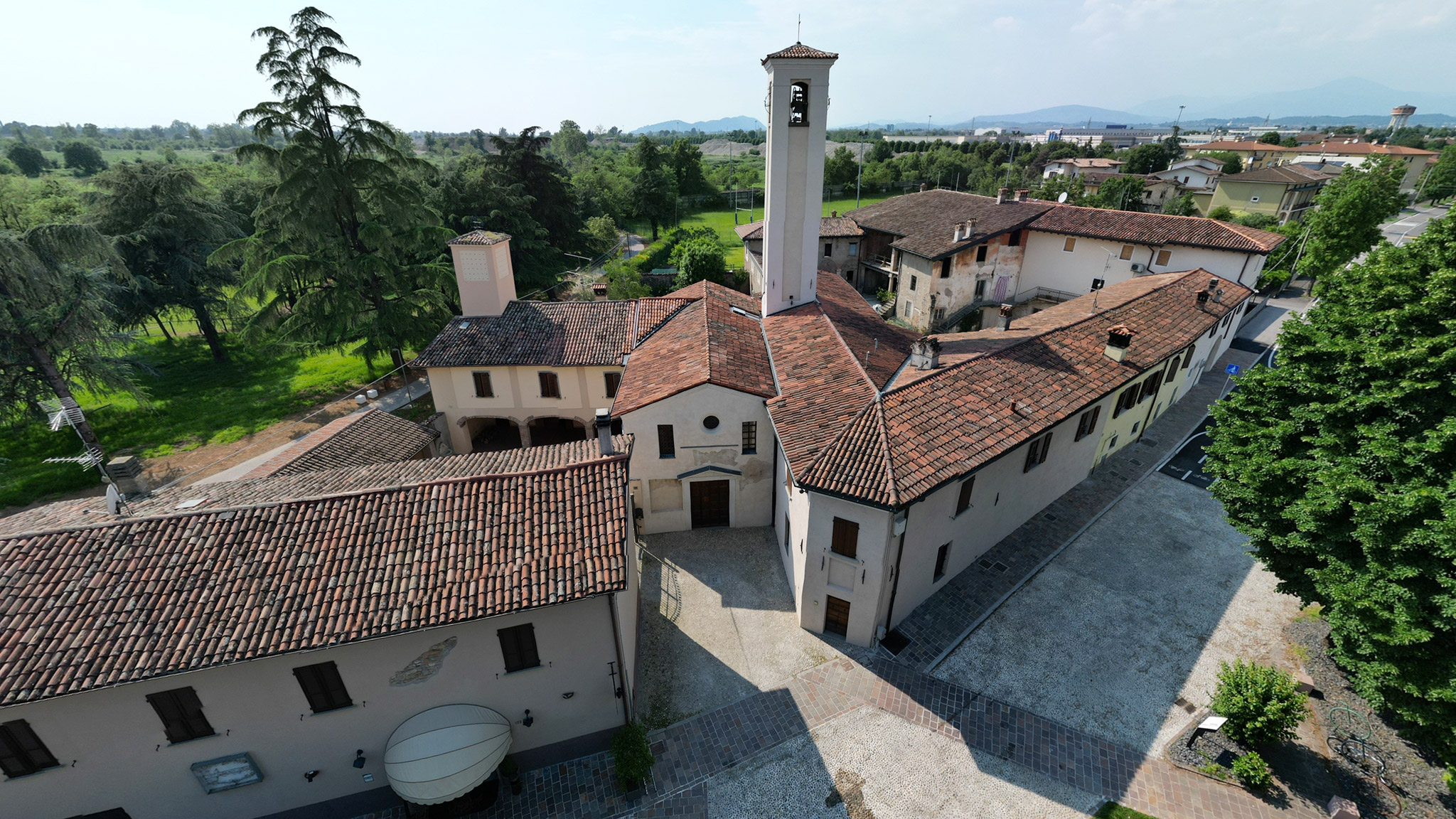
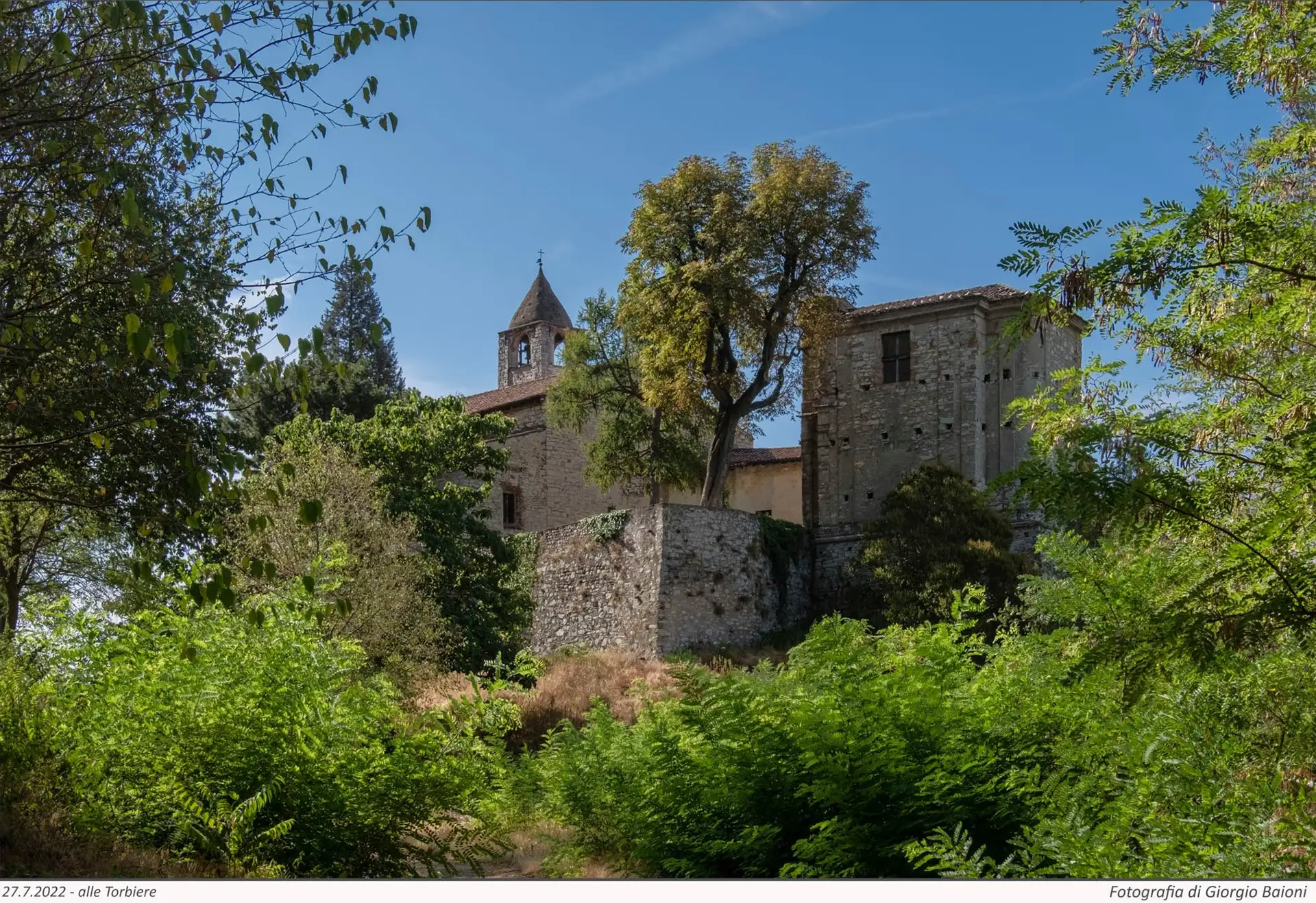
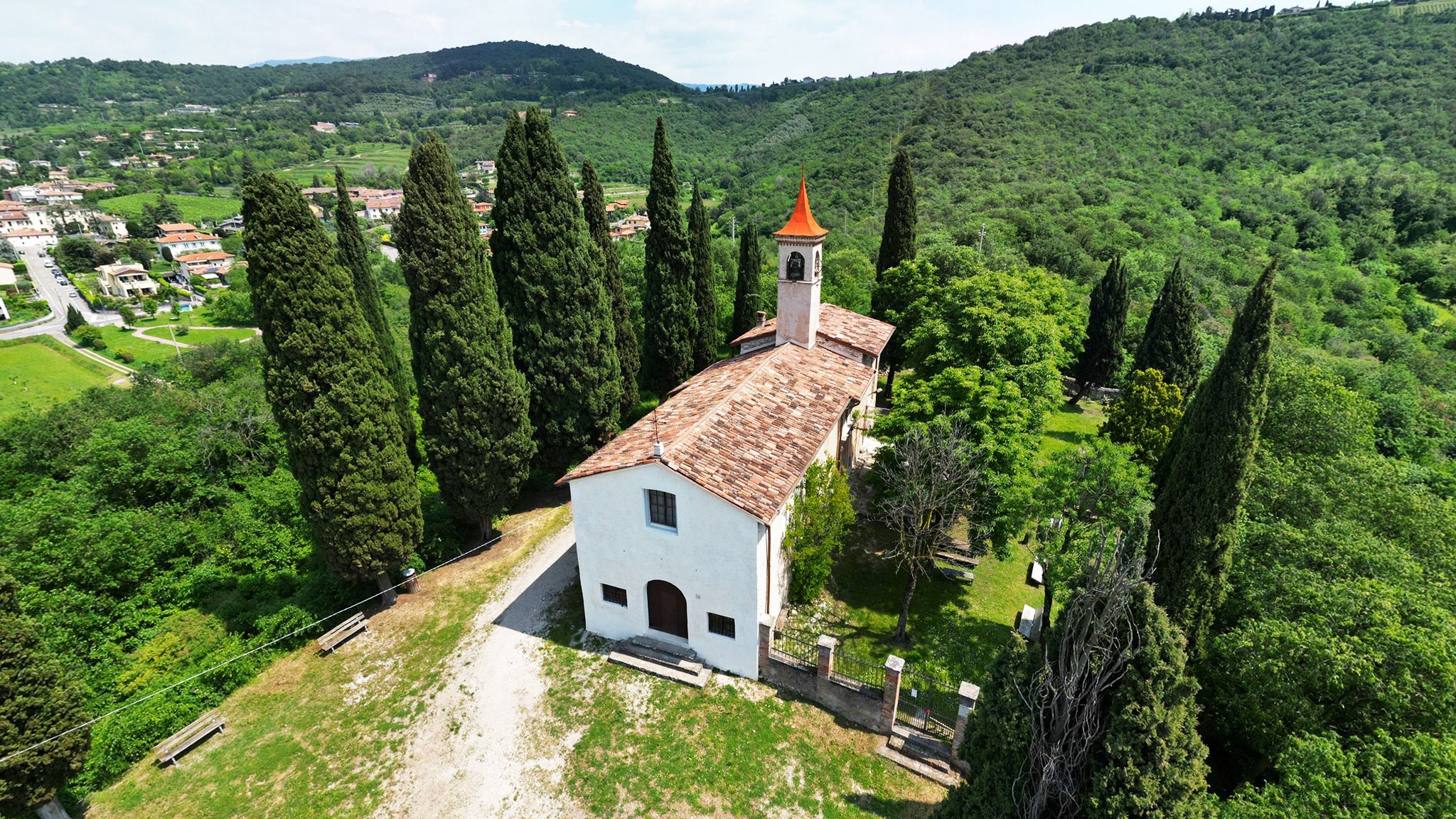
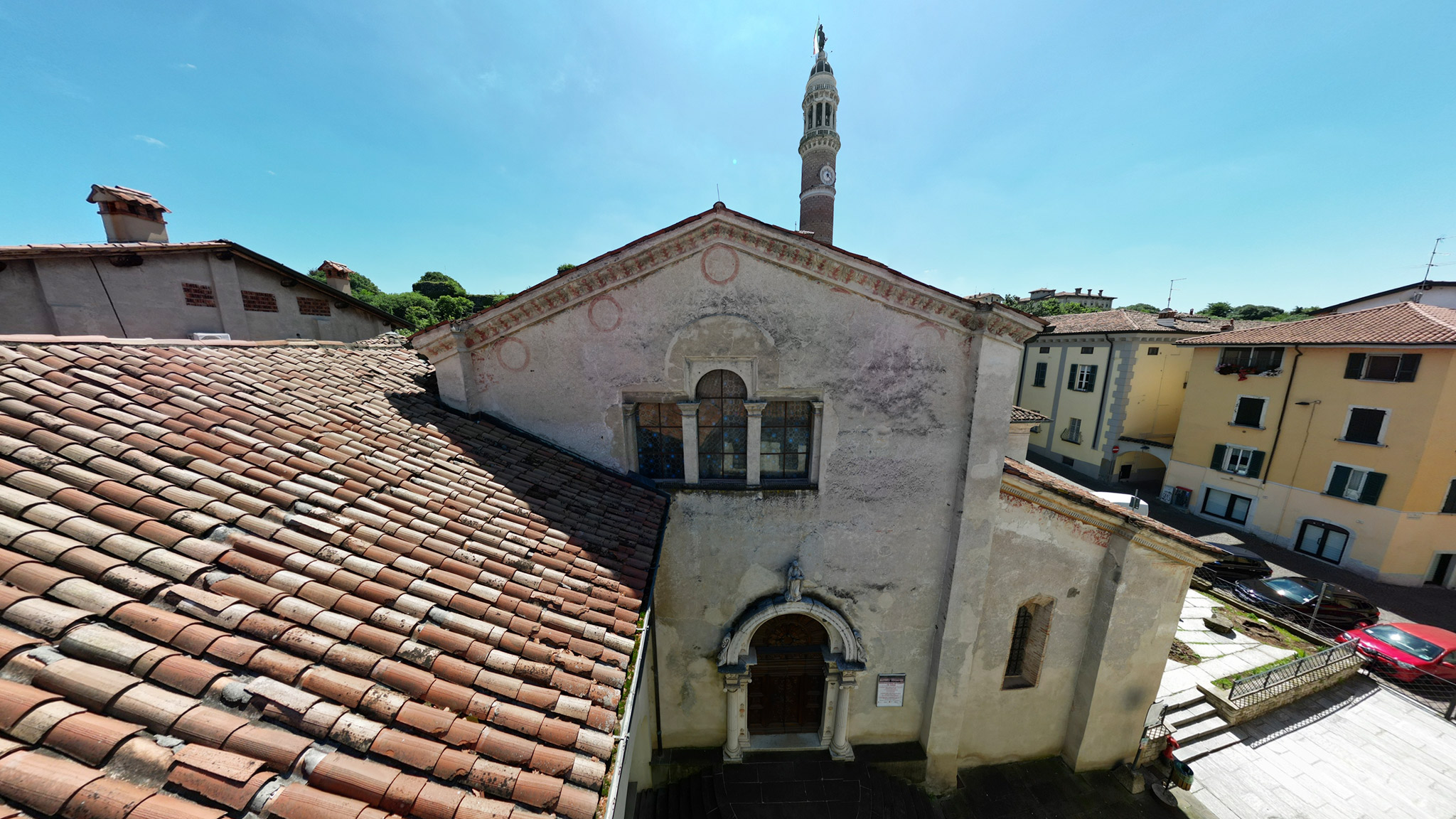
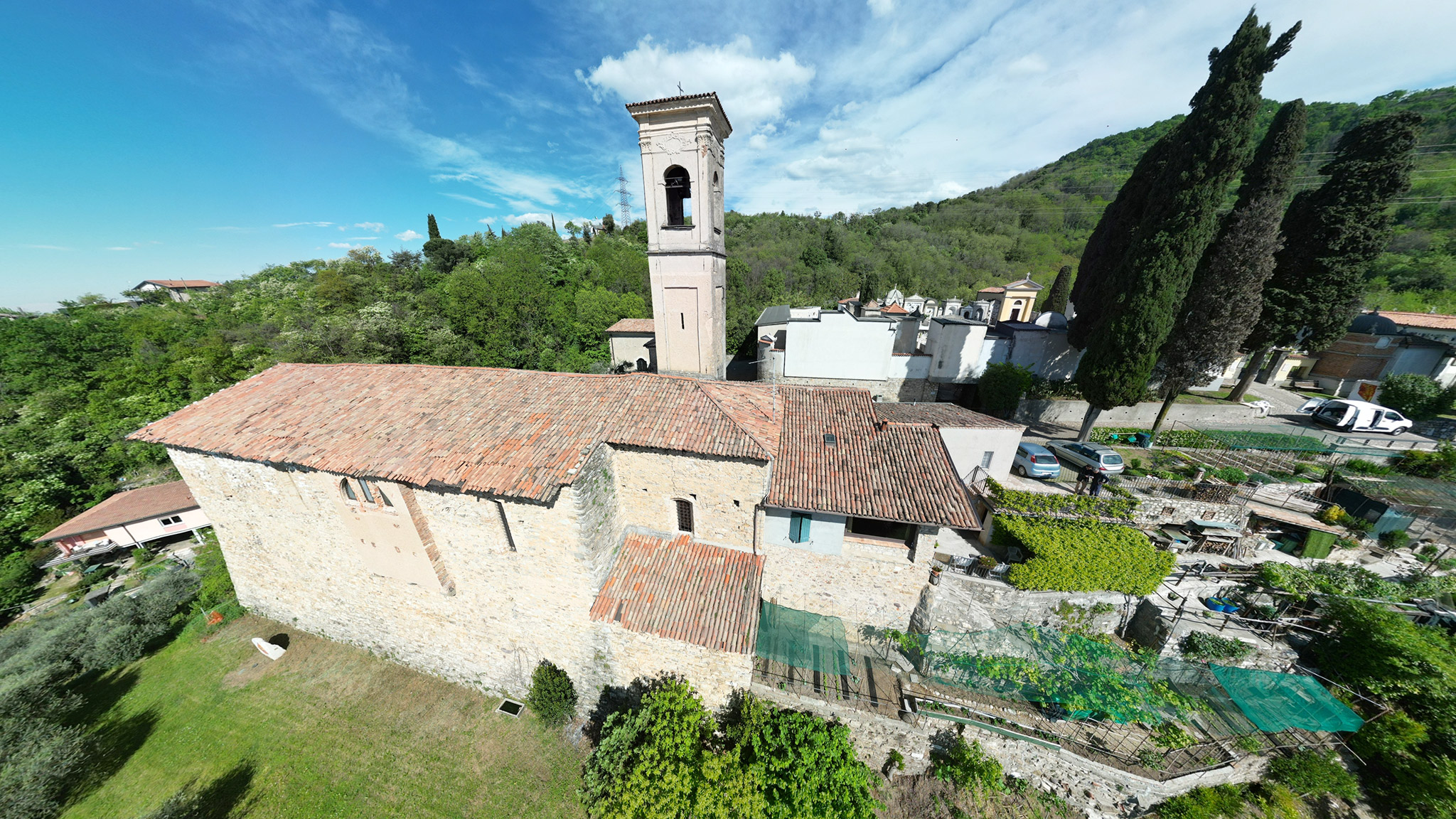
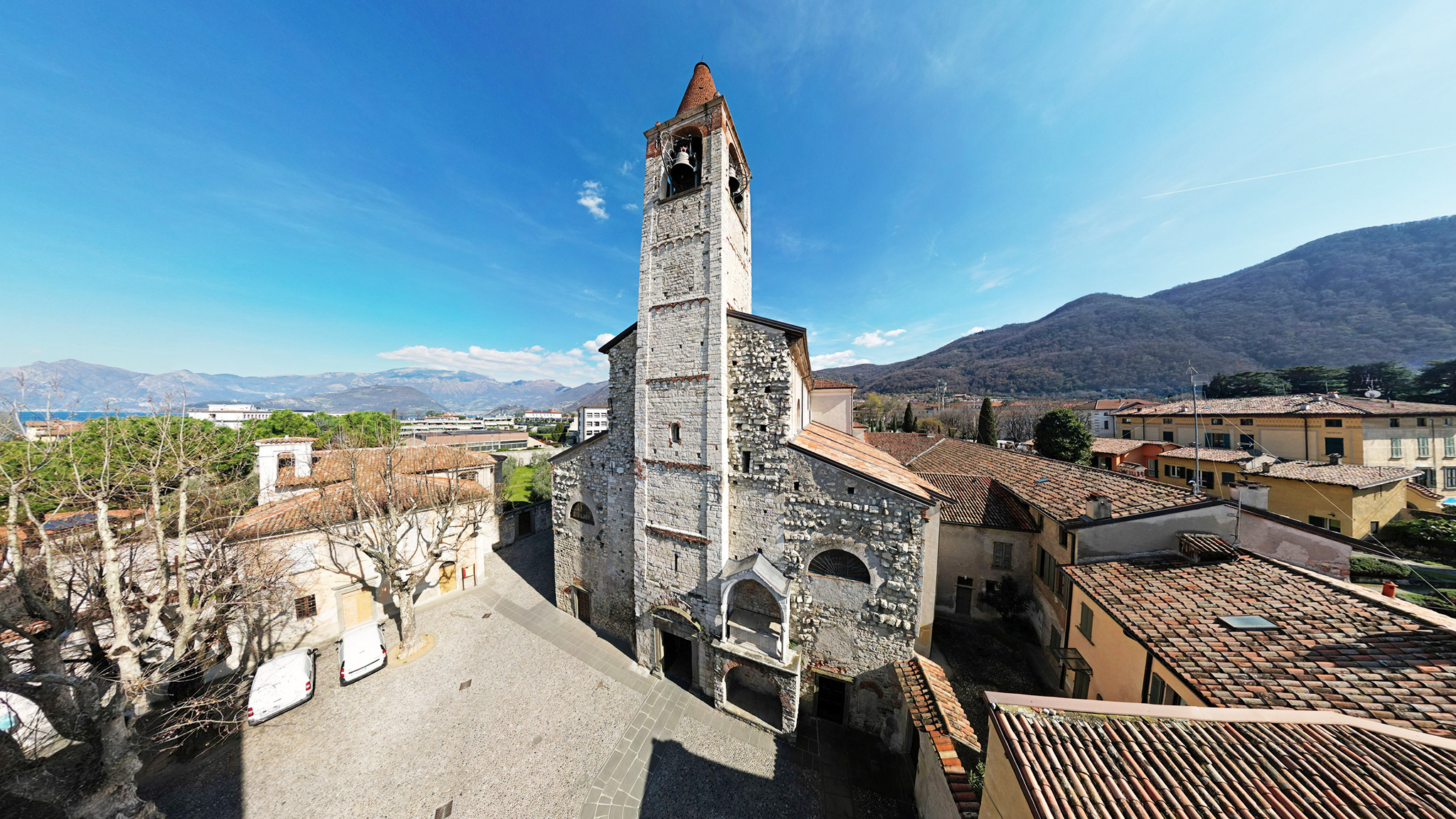
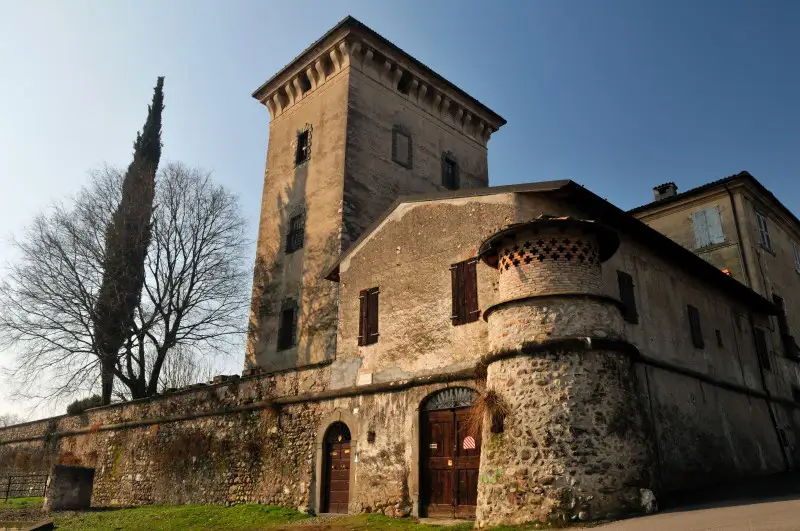
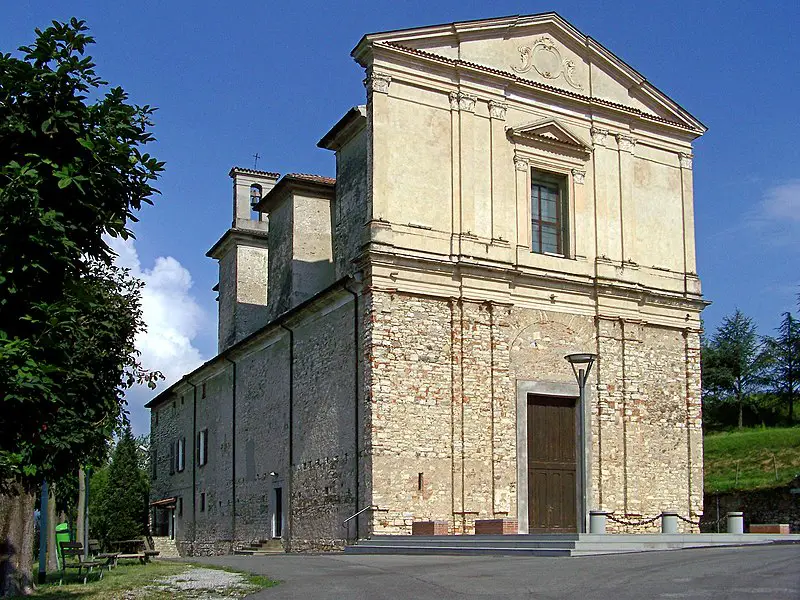
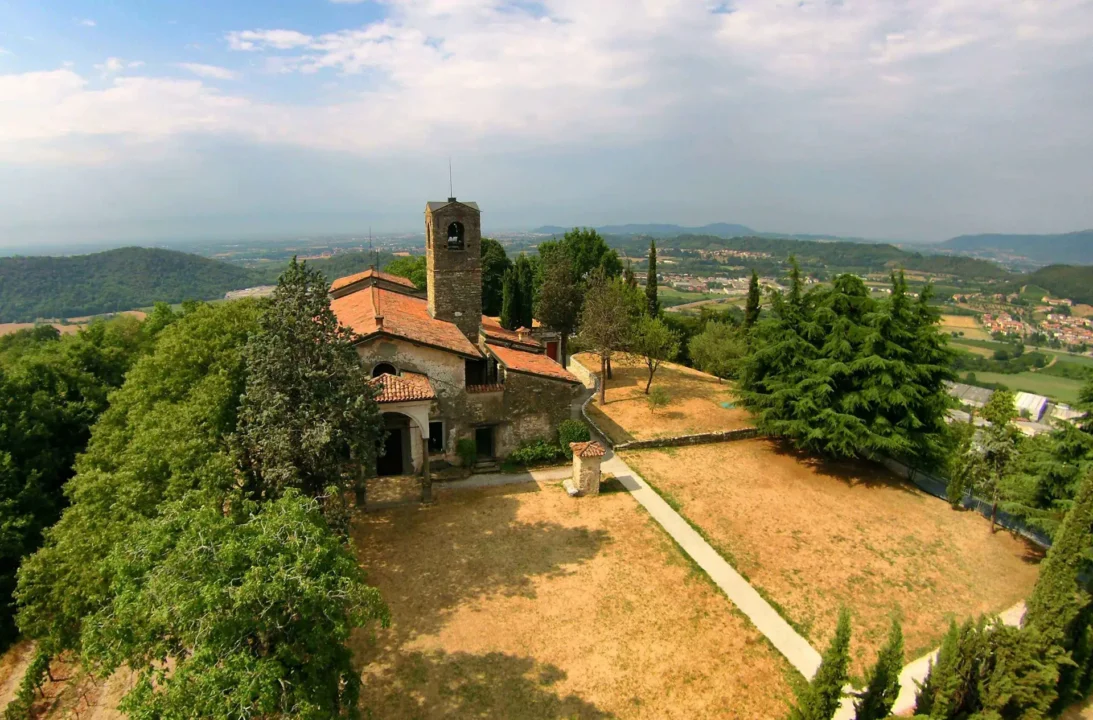
Still visible today from the road linking Val Trompia to the Franciacorta area and Lake Iseo, with its soaring Romanesque bell tower, the parish church of Santa Maria Assunta, in the hamlet of Piè del Dosso, is the oldest building in Gussago and one of the most picturesque in the Brescia area.
15th-century restoration: Renaissance façade and “antique-style” portal by Paolo Guaineri
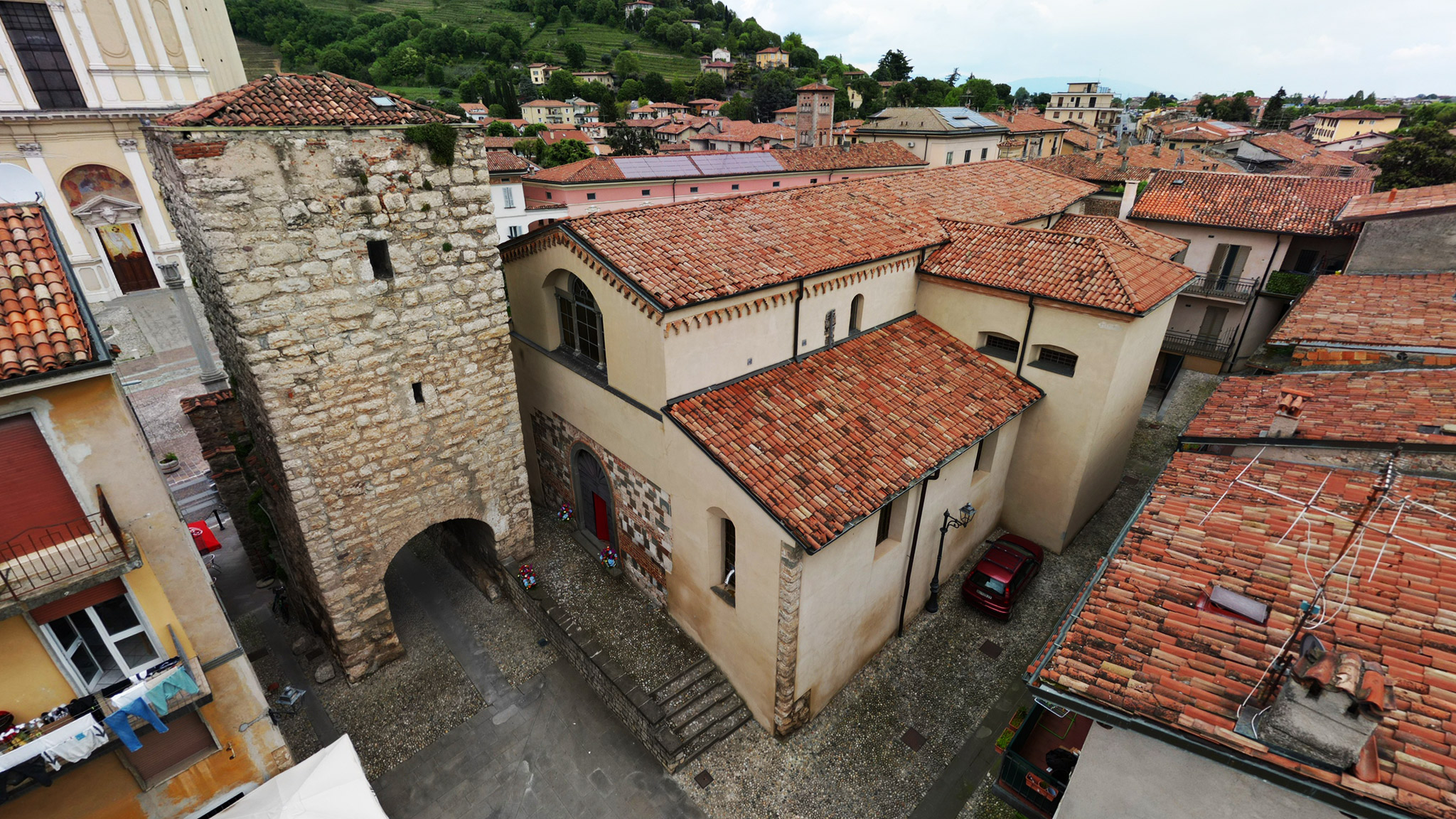
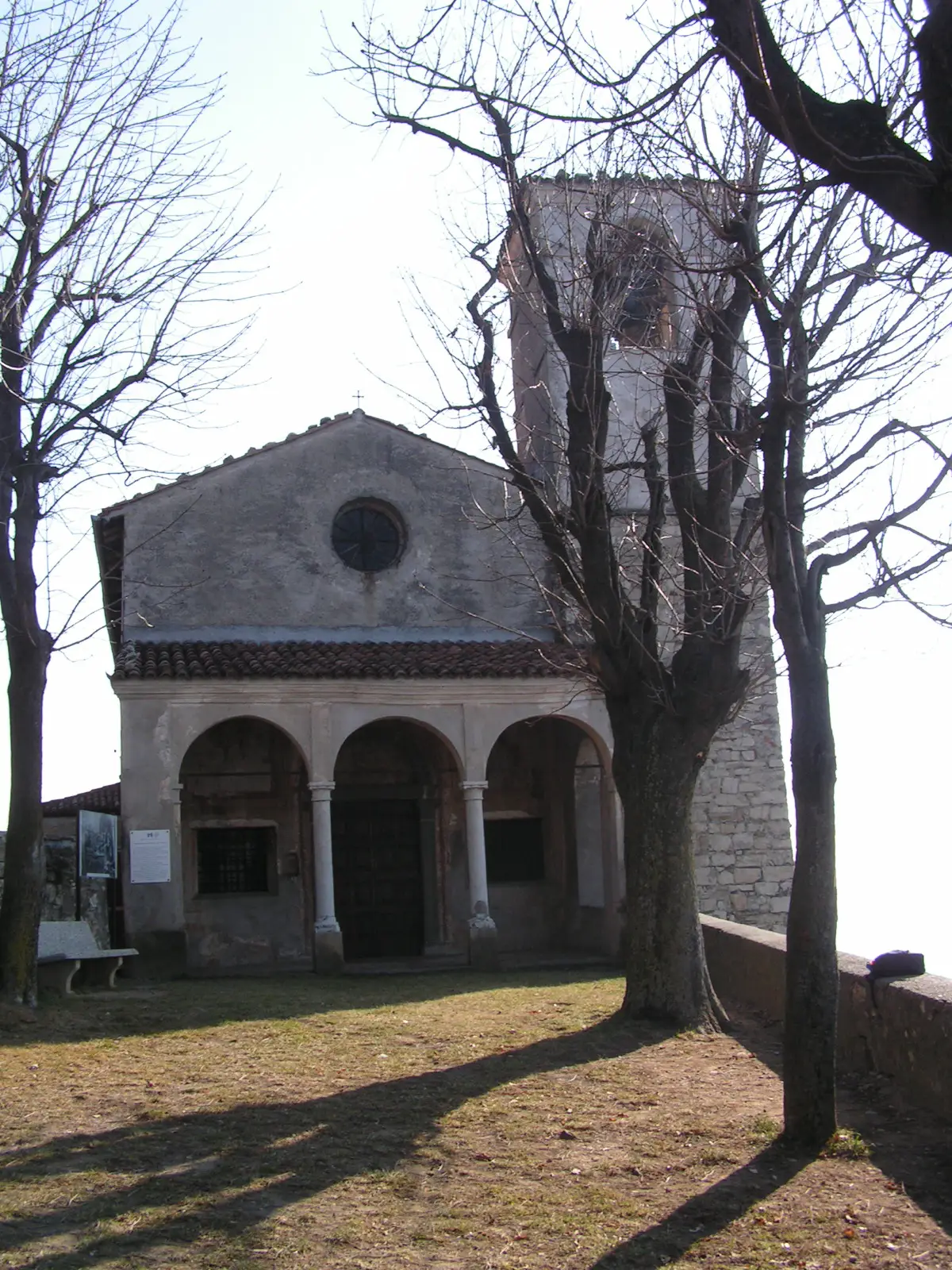
Dating back to the early Middle Ages, the building now appears, both externally and inside the nave, in its Renaissance form, the result of the architectural refurbishment commissioned by Provost Paolo Guaineri and dating from the 1470s. The building is dominated by the imposing quadrangular façade, which rises higher than the structure behind it and the pre-existing front, which we must imagine as gabled and perhaps featuring a rose window, replaced in the new façade by a single quadrangular window. With its simple lines, the façade is devoid of decoration, with the exception of the elegant central portal, featuring pilasters decorated with candelabra motifs, terminating in crochet capitals that support a festooned lintel. The portal is crowned by a triangular pediment, already fully in keeping with the new Renaissance stylistic elements, featuring a cornice of ovules and small leaves, which indicates a rediscovery of classical architectural styles in the Brescia area.
The interior is still Gothic in style: a single nave, a chancel and a cycle of paintings depicting the Assumption commissioned by Guaineri
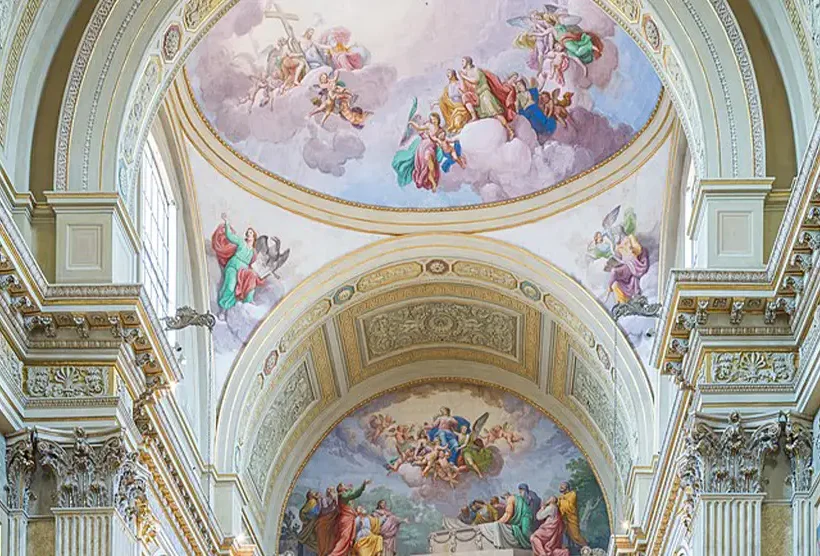
Whilst the exterior bears the hallmarks of a renewal in artistic style, the interior is rich in Gothic heritage: for worshippers entering through the main entrance, a view opened up of a spacious and soaring single-nave space, divided into four bays by transverse pointed arches. The gaze is drawn towards the chancel, a vaulted sanctuary with a ribbed cross vault terminating in the apse, which was once covered by a ribbed umbrella vault. The upper part of the chancel is crowned by a series of corbels, which were once integrated into the main ribs of the vault and upon which the painted narrative unfolds, dominating the entire architectural space. The entire chancel is dedicated to the Assumption of the Virgin, to whom the church is dedicated: behind the post-Tridentine altarpiece, the figures of the Apostles and Angels who were meant to accompany the figure of Mary being assumed into heaven can still be made out. Above, further hosts of angels occupy the corbels, playing various instruments and flanking the figure of God the Father, ready to welcome Mary’s soul and crown her. The entire cycle was commissioned by Paolo Guaineri, whose family coat of arms appears in several places within the chancel; his commitment to the commission is also evident in the employment of a highly skilled master painter, trained in the tradition of Vincenzo Foppa and Paolo da Caylina the Elder.
Sixteenth-century chapels and “Disciplini”: the Madonna della Misericordia and the Men-at-Arms “in the Bramante style”
Next to the entrance archway to the presbytery chapel, two cross-vaulted structures in the form of chapels were added in the mid-16th century, which were built against the walls covered with 15th-century frescoes. The chapel on the right, which has its own altar, was the seat of the Disciplini, members of a lay confraternity dedicated to the Cross. They were responsible for the cycle of frescoes decorating the two walls of the chapel, dating from the last decade of the fifteenth century: above the altar, in the manner of a false polyptych, stands the figure of the Madonna della Misericordia, spreading her mantle to protect the members of the confraternity, flanked by Saints Emiliano and Antonio, in armour and dressed in elegant ‘giornee’ and red tights. Their placement within a perspective niche reveals an awareness of the solutions adopted by Bramante in Milan, in the cycle of “Uomini d’Arme” that once decorated the “Camera dei Baroni” in Palazzo Visconti, later known as Palazzo Panigarola.
The Maviorano Pulpit: a Lombard sculpture dating from the 8th to the 9th century and its connection with Leno Abbey
The Parish Church of Gussago houses another important historical and artistic treasure: the Maviorano Pulpit, consisting of two slabs and two small pillars dating from between the 8th and 9th centuries, a perfect example of Lombard sculptural decoration. The so-called pulpit did not originally belong to the parish church, but most likely comes from the important monastery of Leno, an early medieval monastic foundation to which the parish church of Gussago originally belonged.
Links and useful information


Opening hours: open by appointment
Free admission
Privately owned property