Sanctuary of Santa Maria di Lovernato
- Home
- /
- Arte e cultura
- /
- Parish Churches and Sanctuaries
- /
- Sanctuary of Santa Maria di Lovernato
The origins of the sanctuary and ancient records
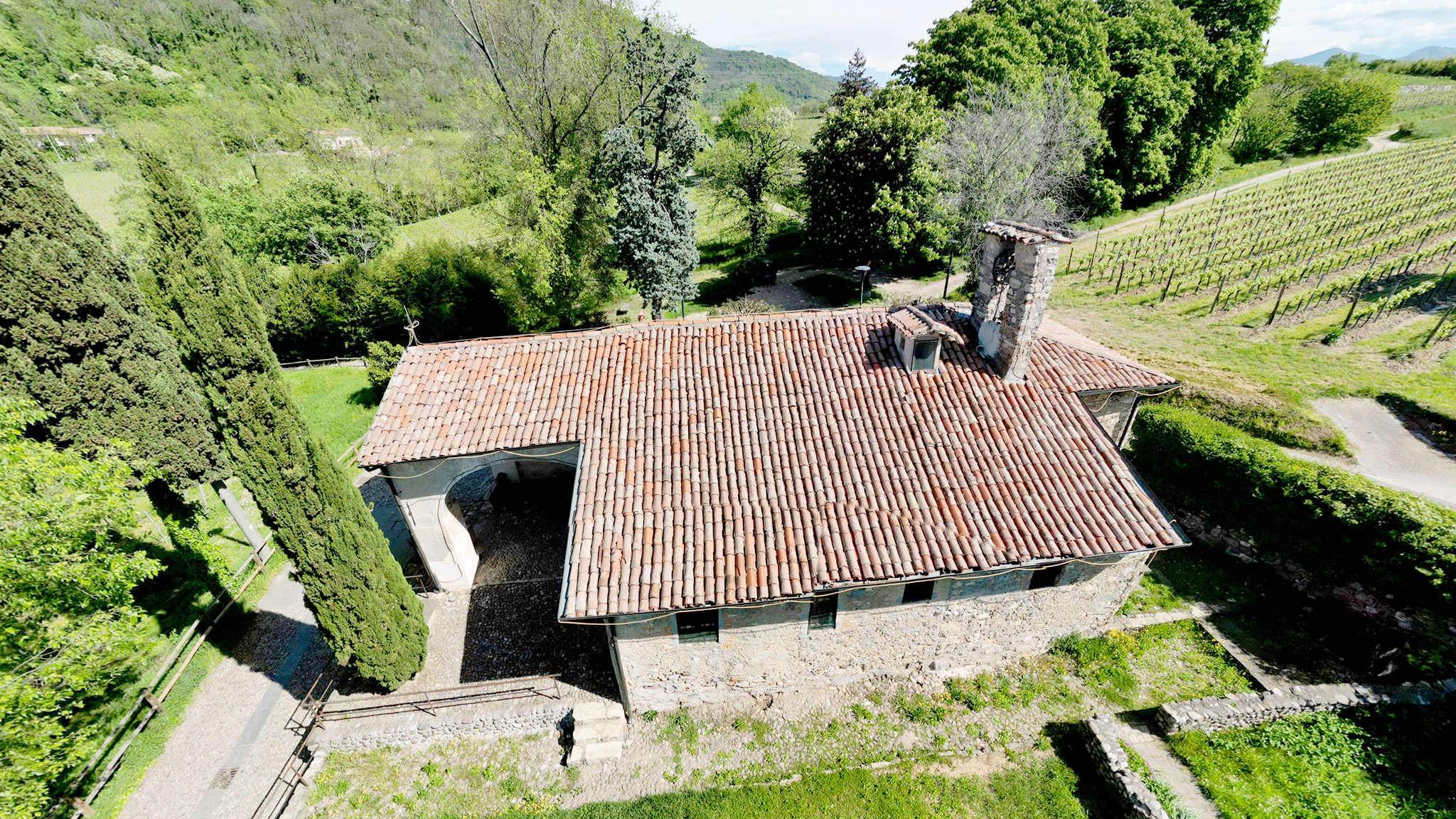
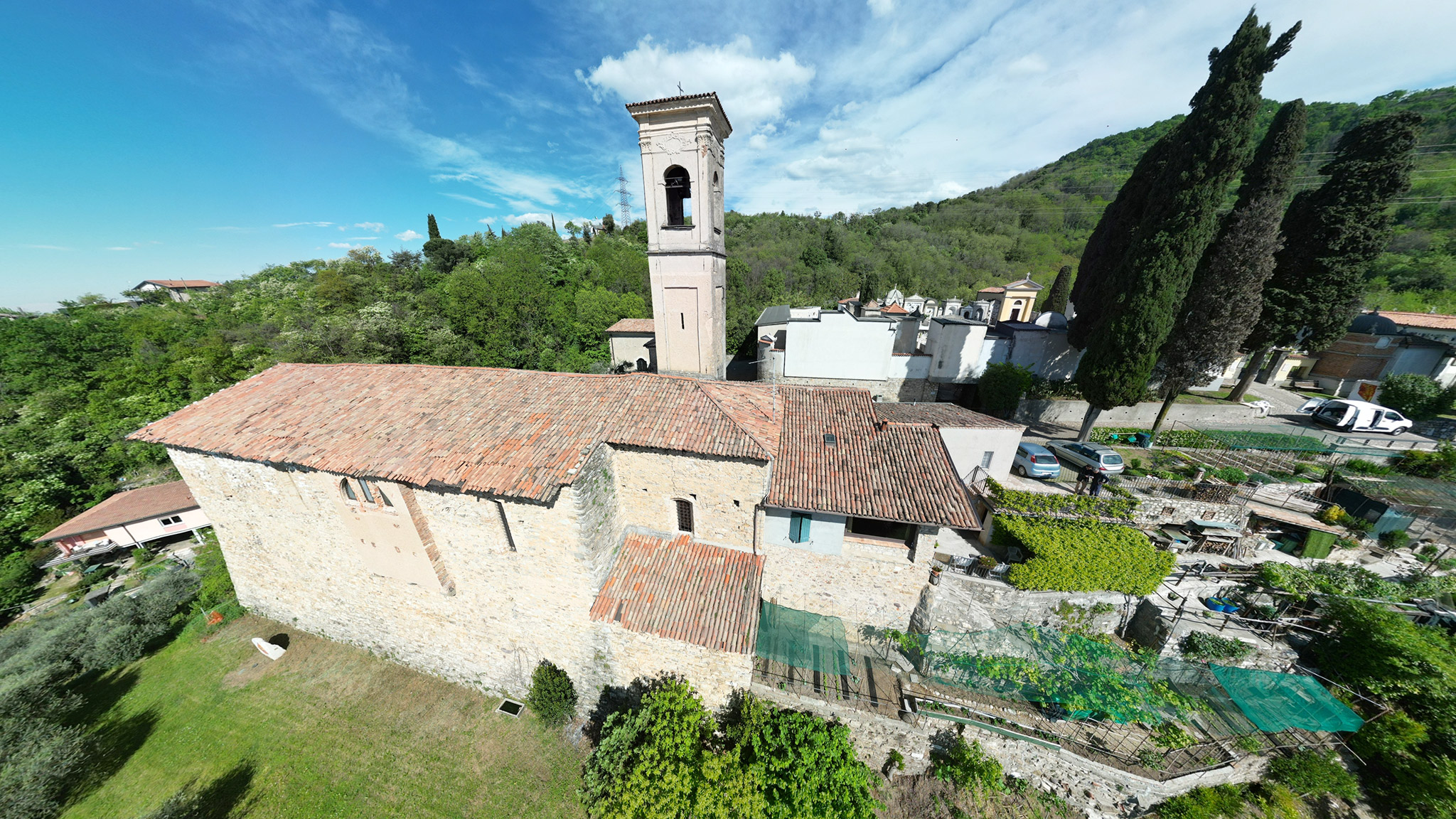
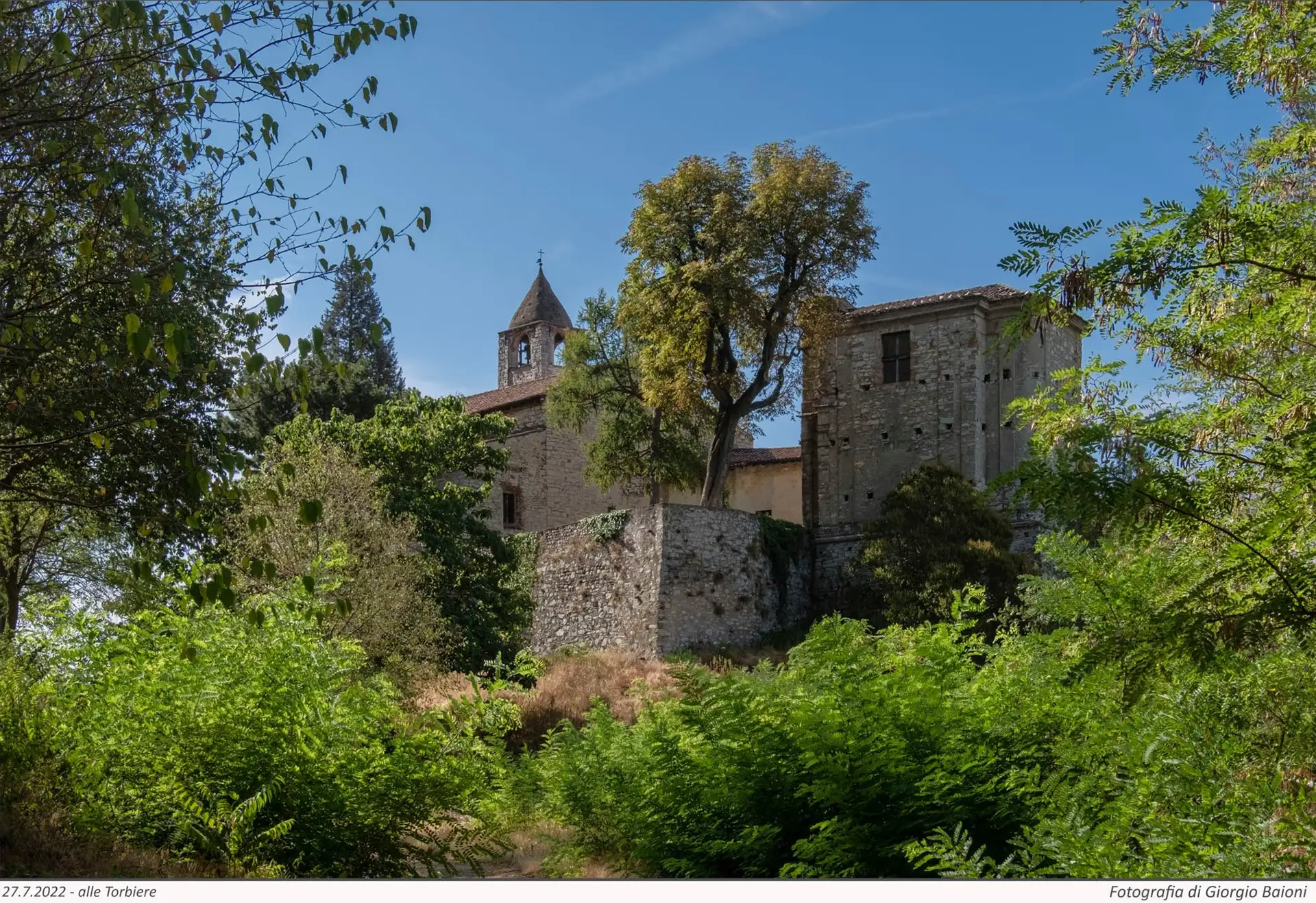
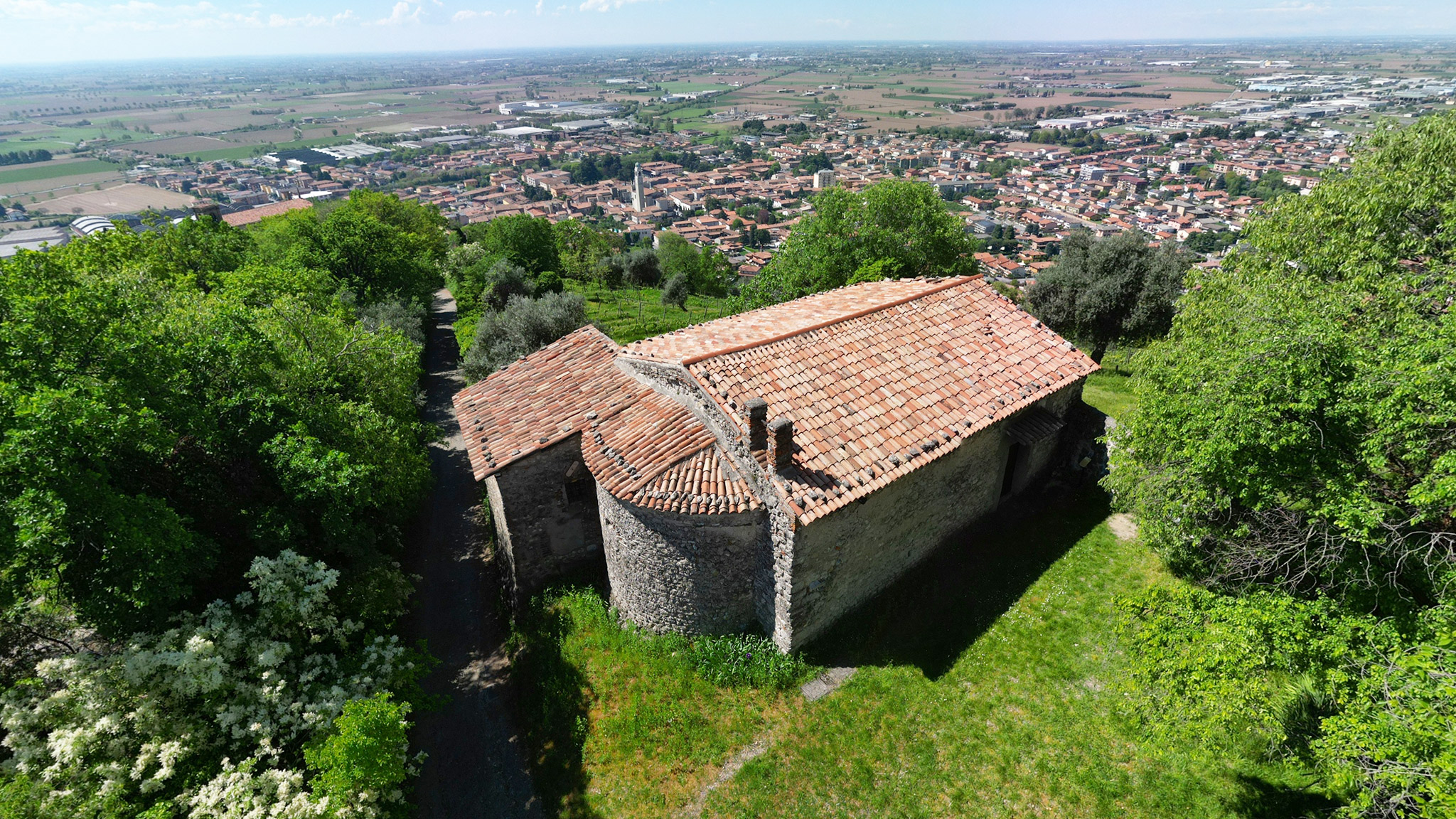
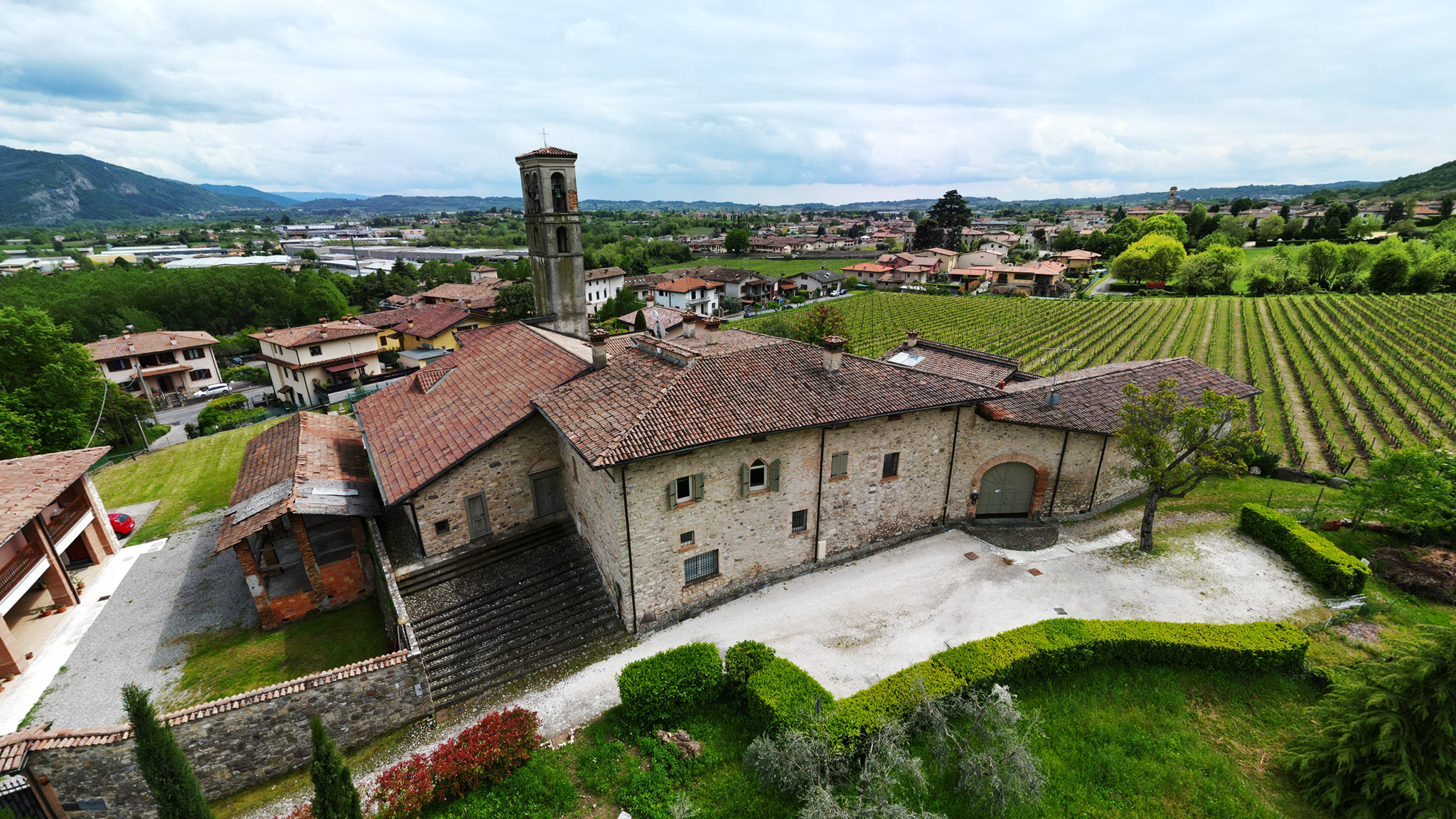
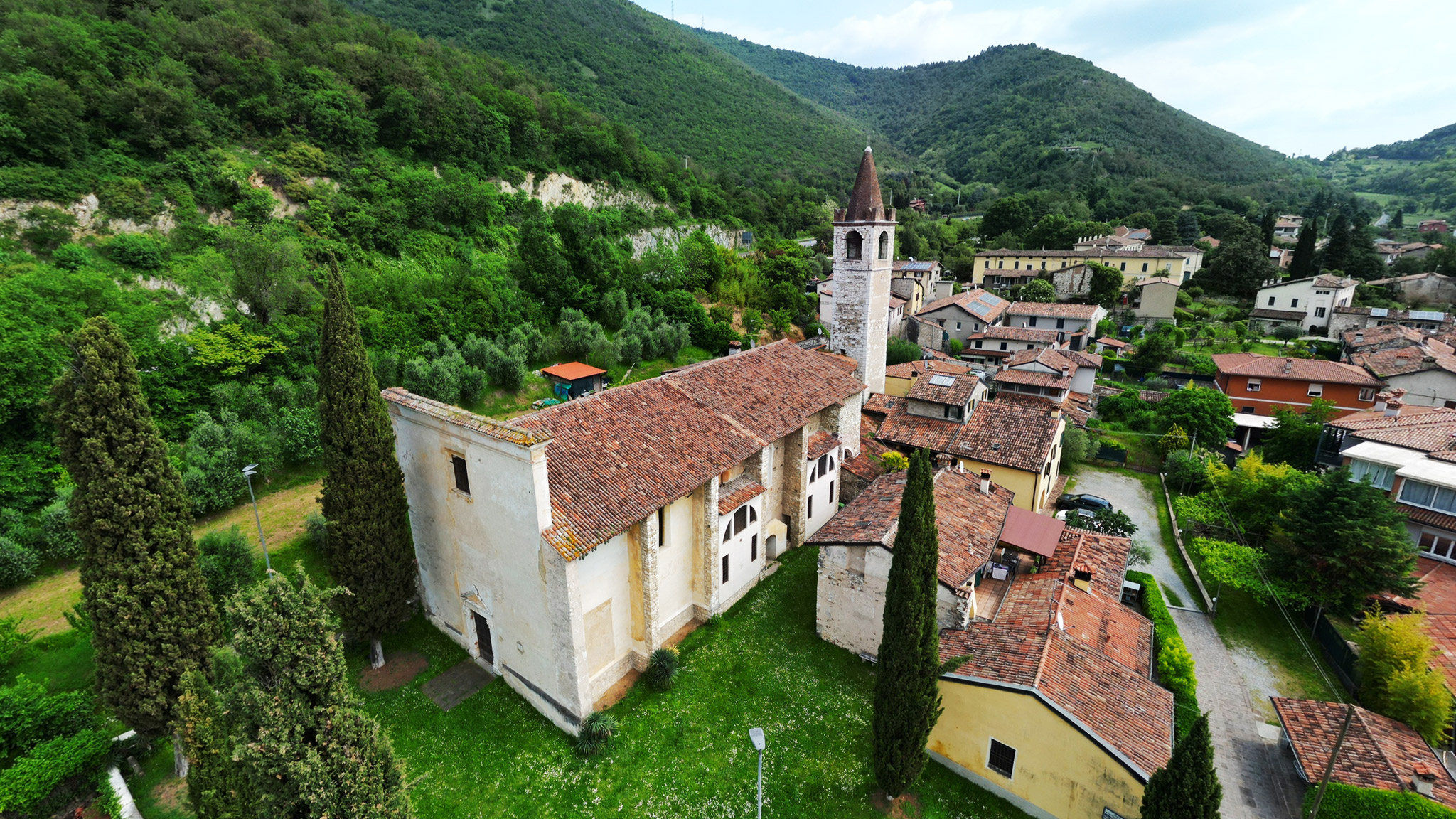
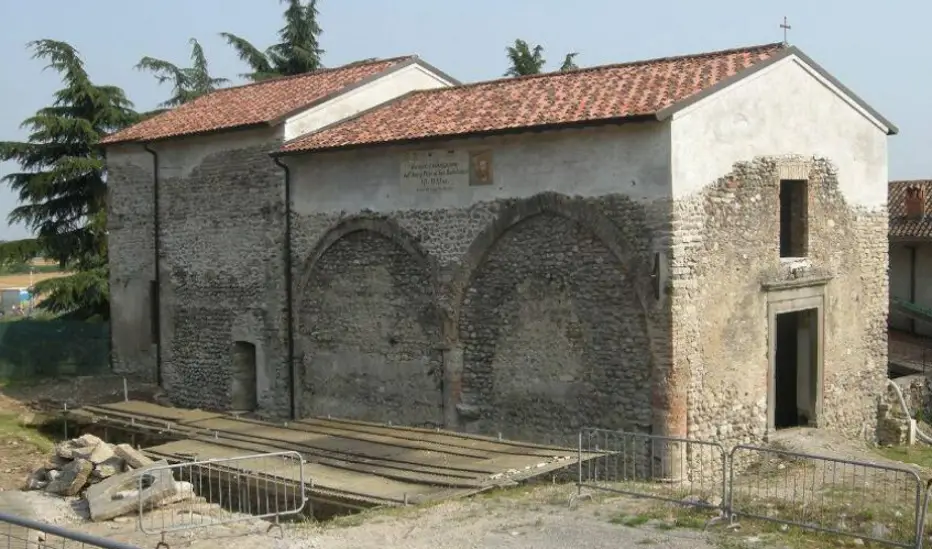
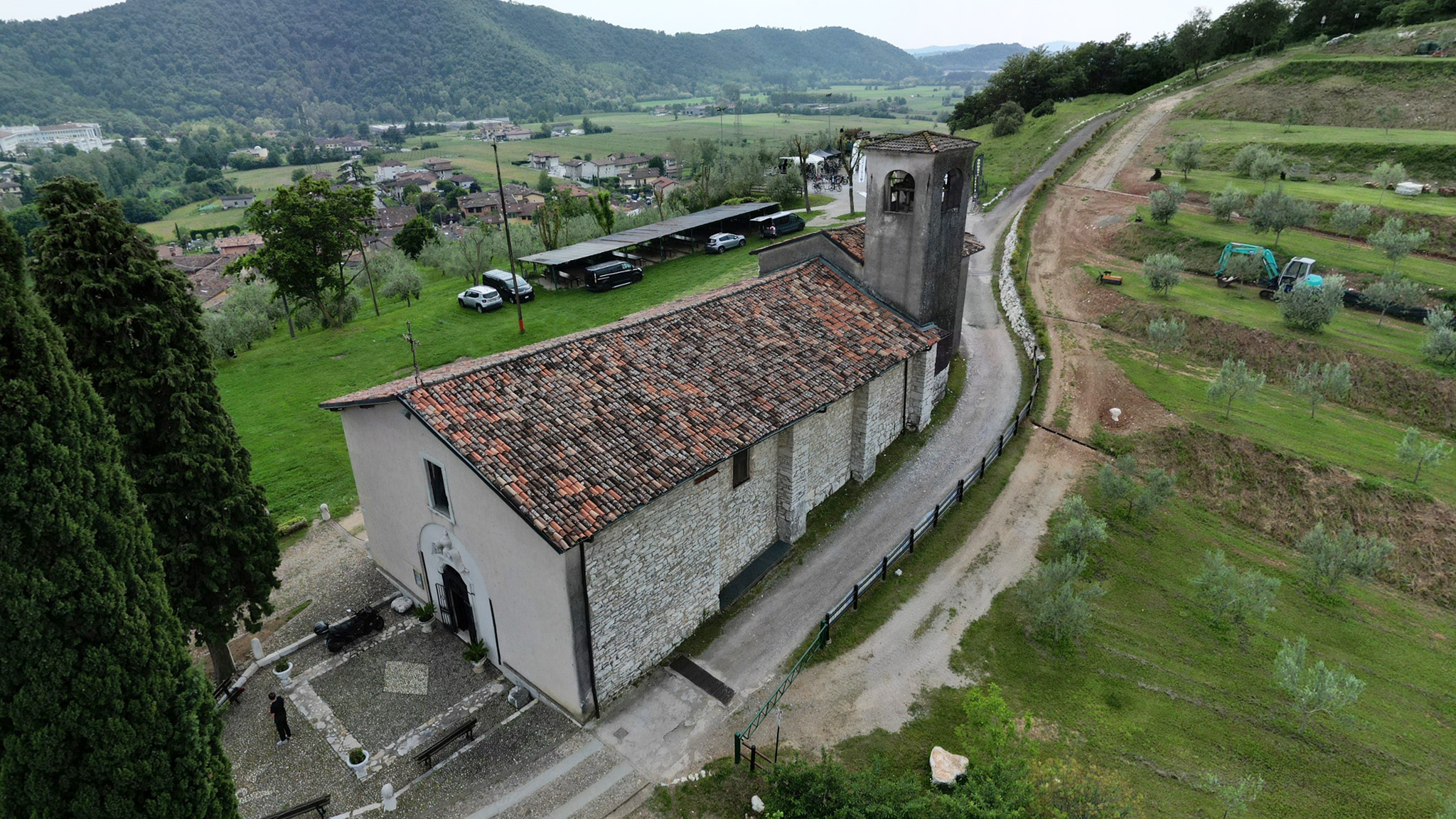
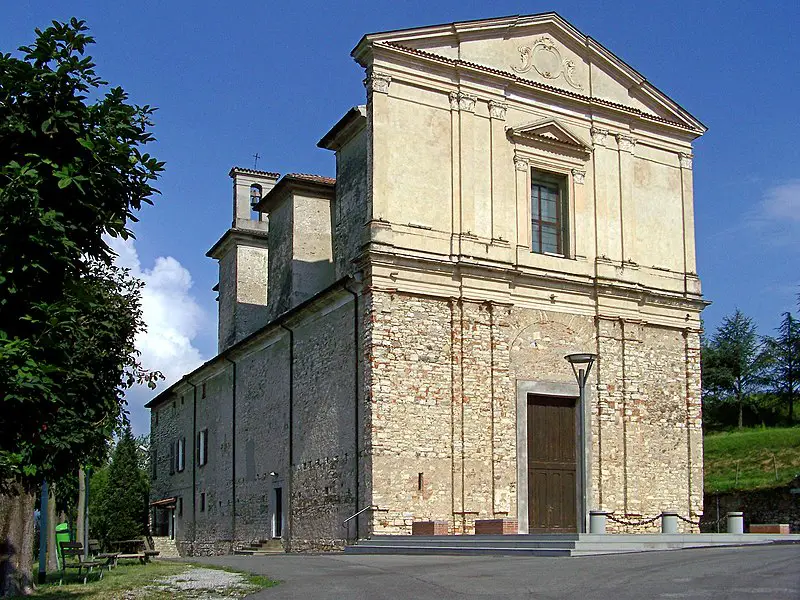
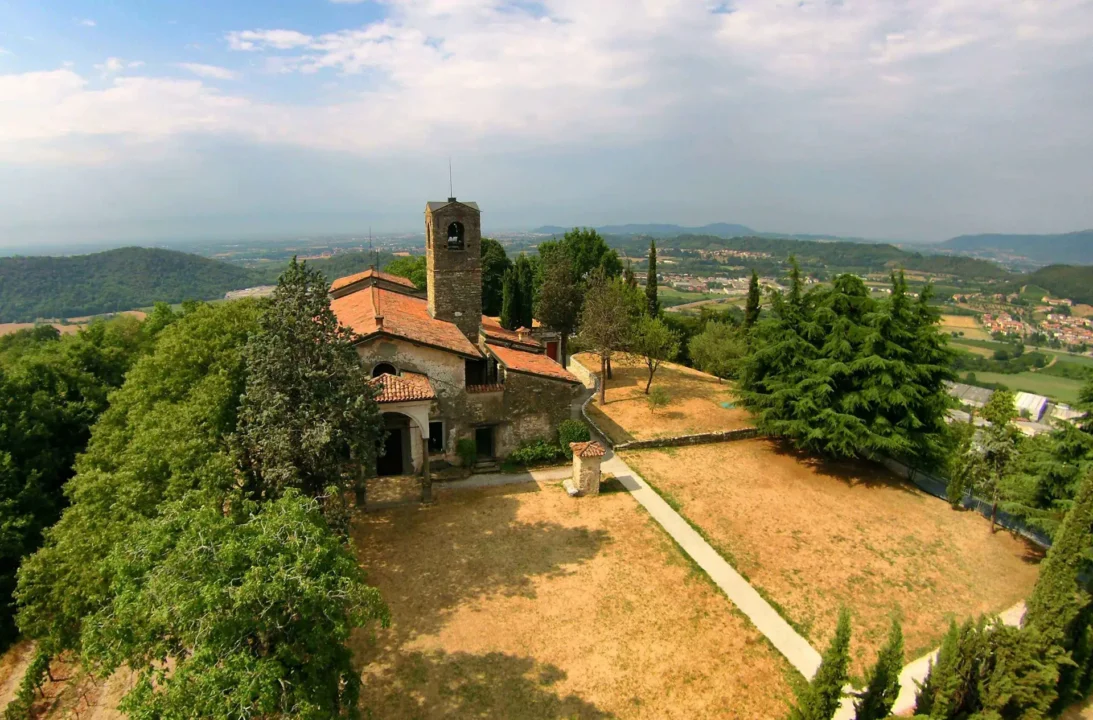
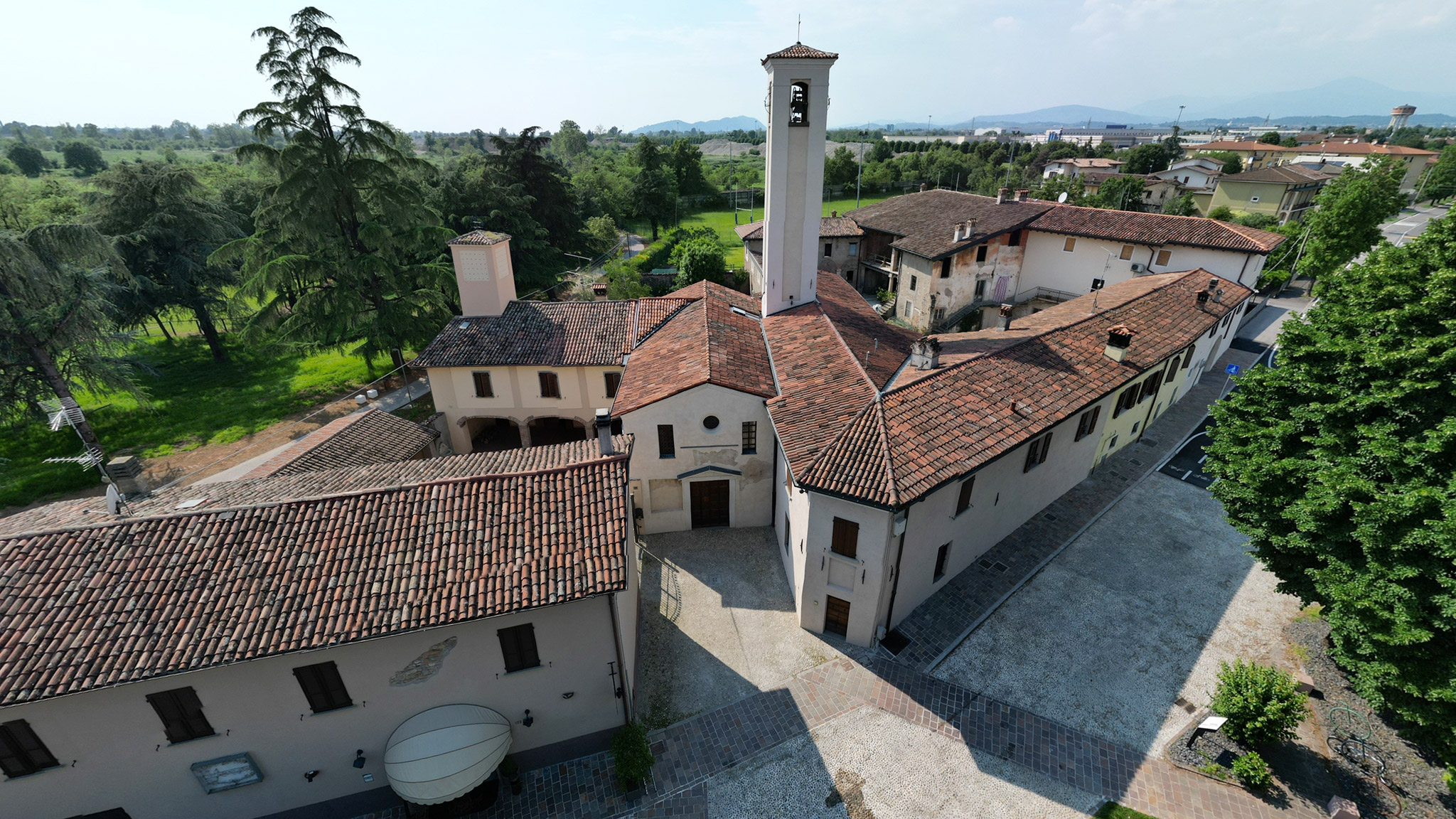
A sanctuary for the local people, situated in a rural setting on a well-travelled road dating back to Roman times, as evidenced by the numerous archaeological finds scattered throughout the surrounding area, the Church of Santa Maria di Lovernato owes its name to the place where it was built, referred to as Luernaco in a document dating from 807.
A pictorial archive of the local community
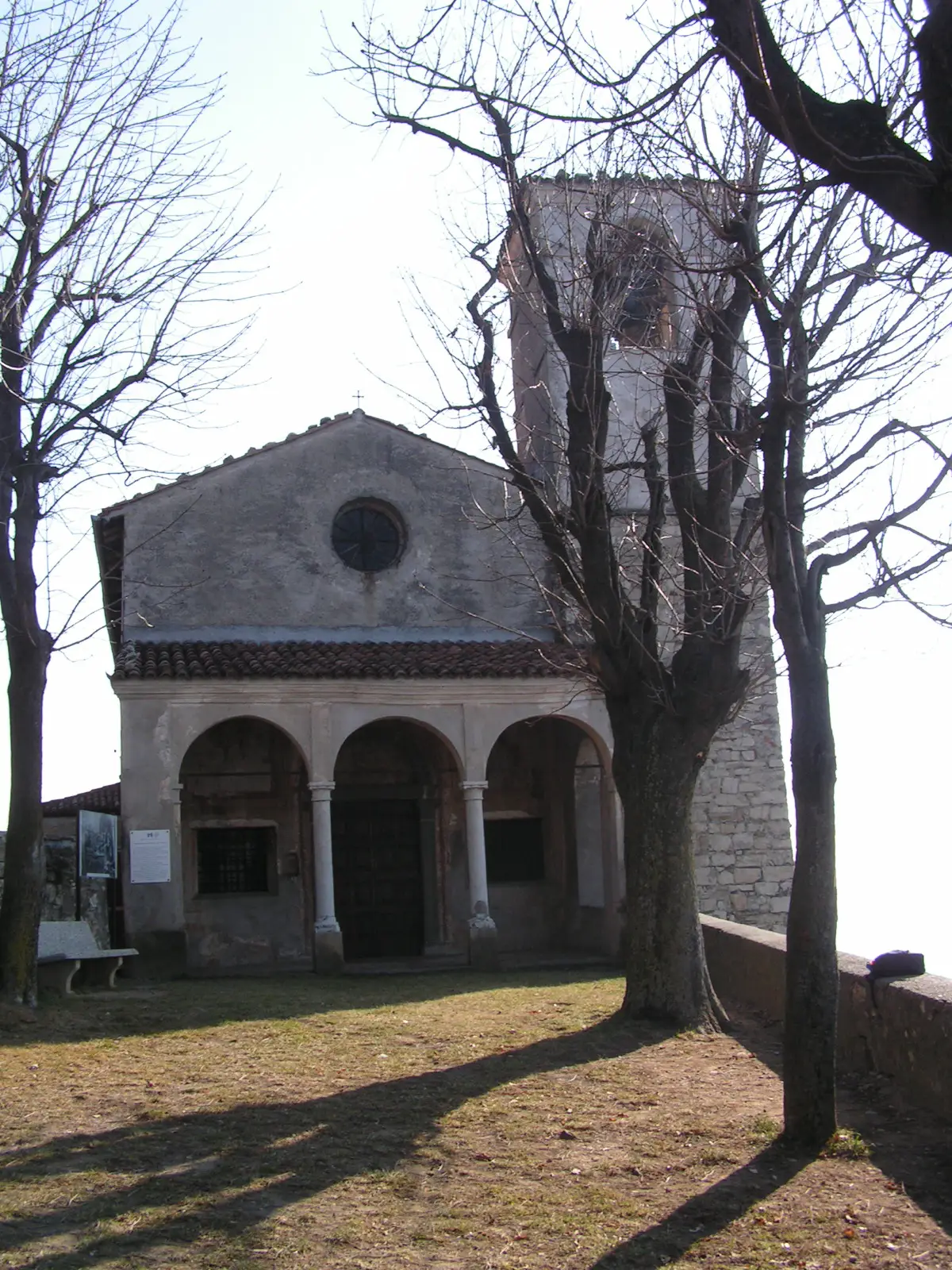
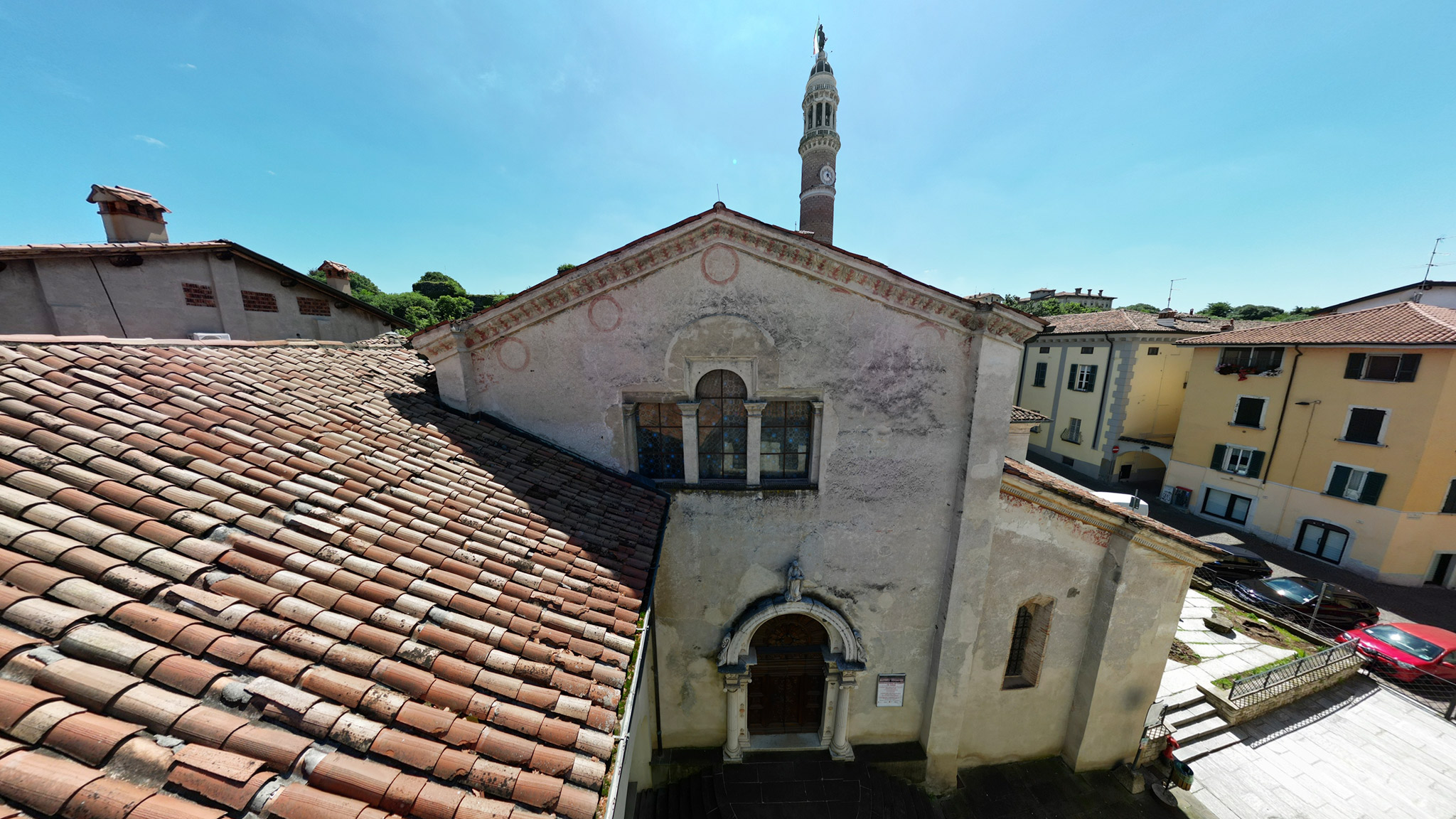
Although modest in appearance from the outside, with a simple gabled roof, its interior houses a rich collection of votive frescoes, commissioned by local families, whose names are often inscribed on the panels. For this reason, the church is not merely a pictorial anthology of the masters who worked in the Franciacorta area between the 15th and 16th centuries, but can be interpreted as a veritable painted documentary archive, such is the abundance of inscriptions and cartouches that remain on its walls, enabling us to reconstruct certain social and historical dynamics that would otherwise have been irretrievably lost. Indeed, the names of Giacomo della Torre and Antonio (Tonino) de Guarneri remain, members of prominent families involved in the management of the church during the fifteenth century, as do the Begnoti, who are to be identified with the Bignotti.
Nave and chancel: the layout of the pictorial cycle
The wall decoration, completed between 1479 and 1529, features a clear division between the nave and the chancel: the nave is adorned with numerous votive panels, dedicated primarily to the Virgin Mary and, to a lesser extent, to the saints, whilst the chancel features a unified cycle of paintings dedicated to deliverance from plagues and to orthodoxy.
The Master of San Felice del Benaco and the Virgin Enthroned
Most of the frescoes in the nave, where the figure of the Virgin and Child Enthroned dominates, are attributed to the Master of San Felice del Benaco, a painter responsible for numerous pictorial cycles scattered throughout the Brescia area, whose style is reminiscent of that of a great master such as Paolo da Caylina.
Votive offerings, animals and rural devotion
Alongside the numerous votive panels are depictions of animals, such as cows and horses, which are themselves votive offerings found in other parts of Brescia, such as the Church of San Bernardino in Erbusco; these bear witness to a world governed by the rhythms of the countryside, where it was necessary to ask for divine grace for the safety of those animals essential to working the fields. Bishop Bollati took the opportunity to express his disapproval of these paintings during his pastoral visit.
Friar Benedetto’s commission and the chancel cycle
In the chancel, the decoration, completed in the 1520s, was entrusted to two prominent masters: one was responsible for the faux altarpiece, whilst the other worked on the large lunettes on the side walls, commissioned by Fra Benedetto da Rezzato, as recorded in the dedicatory inscription: the patron, perhaps a Franciscan friar or perhaps simply a lay member of the Third Order, is depicted in prayer at the foot of the altar.
Vincenzo de Barberis and the plague altars
Whilst it has not been possible to identify the first artist, who is known to have worked alongside Francesco Prata da Caravaggio, the identity of the artist behind the two large lunettes is certain: he is Vincenzo de Barberis, an artist from Brescia who trained under the great masters of Leonardo’s Milan, such as Bramantino, Zenale and Bernardino Luini. In Lovernato, the painter created two frescoes as arched plague altars: the Sacred Conversation, set in a natural landscape, depicts the Virgin Mary flanked by miracle-working saints, such as Saint Anthony the Abbot, frequently invoked for the protection of animals; Saint Roch, protector against the plague; and Saint Erasmus, prayed to for protection against intestinal ailments.
Links and useful information


Opening hours: open by appointment
Free admission
Publicly owned property